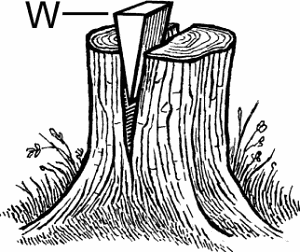
: a piece of a substance (such as wood or iron) that tapers to a thin edge and is used for splitting wood and rocks, raising heavy bodies, or for tightening by being driven into something
2
a
: something (such as a policy) causing a breach or separation
b
: something used to initiate an action or development
3
: something wedge-shaped: such as
a
: an array of troops or tanks in the form of a wedge
b
: the wedge-shaped stroke in cuneiform characters
c
: a shoe having a heel extending from the back of the shoe to the front of the shank and a tread formed by an extension of the sole
d
: an iron golf club with a broad low-angled face for maximum loft
Noun
He used a wedge to split the firewood.
A wedge held the door open.
The battalion formed a wedge and marched toward the enemy. Verb
She wedged her foot into the crack.
The dog got wedged between the couch and the end table.
I wedged myself into the car's back seat.
She wedged the door open.
Recent Examples on the Web
Examples are automatically compiled from online sources to
show current usage.Read More
Opinions expressed in the examples do not represent those of Merriam-Webster or its editors.
Send us feedback.
Noun
Vaonis has promised to expand the Atlas ecosystem after launch, including a backpack, filters, an equatorial wedge and most importantly, new imaging modules.—
Harry Bennett,
Space.com,
15 Oct. 2026 Serve with rice, lime wedges, whole red chiles, basil leaves, mint leaves, cilantro leaves, lettuce, the tamarind sauce, and the garlic-ginger sauce.—
Emma Specter,
Vogue,
14 Oct. 2026
Verb
She was sprawled out on a ladder that was wedged between the ring apron and the announce table.—
Ryan Gaydos Outkick,
FOXNews.com,
11 Oct. 2026 Rush’s musical complexity leaned towards proggy adventures with time signatures and song structure, while Steely Dan were more inclined to wedge wild stacks of jazz chords into pop songs.—
Brian Hiatt,
Rolling Stone,
10 Oct. 2026 See All Example Sentences for wedge
Word History
Etymology
Noun
Middle English wegge, from Old English wecg; akin to Old High German wecki wedge, Lithuanian vagis
First Known Use
Noun
before the 12th century, in the meaning defined at sense 1


 Copy Citation