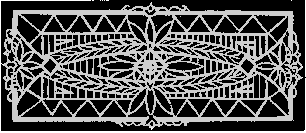
Ornamental work formerly made with grains or beads is called filigree. It comes from an Italian word made from the Latin words for thread and grain. Today filigree is usually of fine wire of gold, silver, or copper, and is used chiefly to decorate gold and silver surfaces. Filigree can also apply to any ornamental openwork of delicate or intricate design or to a pattern or design resembling such openwork.
Examples of filigree in a Sentence
Noun
a surface decorated with filigree and pearls
Recent Examples on the Web
Examples are automatically compiled from online sources to
show current usage.Read More
Opinions expressed in the examples do not represent those of Merriam-Webster or its editors.
Send us feedback.
Noun
Mancuso’s cascading lines and shimmering filigrees are dazzling, yet almost instantly bring to mind the work of Beck, Vai, Eric Johnson, Eddie Van Halen and other legends who inspired him.—George Varga, San Diego Union-Tribune, 22 Jan. 2026 Inching through the beam of light, an alien creature crawled across the surface of the sand, resembling an inch-long cluster of ghostly leaves fringed with silvery filigree and capped with a pair of antennae-like stalks.—Luis Melecio-Zambrano, Mercury News, 18 Jan. 2026
Verb
Each story is filigreed with the meta-commentary flashing onscreen and a daredevil’s enjoyment of audience interaction.—Jackson McHenry, Vulture, 22 July 2025 Two years and much ado later, Raghda serves lattes filigreed with milk art at a strip-mall coffee shop and Rafaa hosts community gatherings at an event space across the way.—Vivian Yee, New York Times, 14 Mar. 2020 See All Example Sentences for filigree
Word History
Etymology
Noun and Verb
modification of French filigrane, from Italian filigrana, from Latin filum + granum grain — more at corn