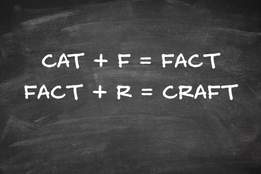
What do you have to gain by knowing the root of ungainly? Plenty. The gain in ungainly is an obsolete English adjective meaning "direct" that ultimately comes from the Old Norse preposition gegn, meaning "against." (It is unrelated to the noun in "economic gains" or the verb in "gain an advantage"; those came to English by way of Anglo-French.) Ungainly can describe someone who is clumsy, as in "a tall, ungainly man"; or something that causes you to feel clumsy when you try to handle it, as in "a car with ungainly controls"; or something that simply looks awkward and out of place, as in "an ungainly strip mall."
Adjective
He was tall and ungainly.
getting the ungainly couch up the stairs was a real chore
Recent Examples on the Web
Examples are automatically compiled from online sources to
show current usage.Read More
Opinions expressed in the examples do not represent those of Merriam-Webster or its editors.
Send us feedback.
Adjective
Instead of an ungainly pile of pillows, modern buyers prefer to let the materials sing.—
Abby Wolner,
Better Homes & Gardens,
17 June 2026 Seydoux tromps through the film with a masculine heaviness — a sense of dysphoria that translates to her character’s ungainly bearing.—
Daniel D'addario,
Variety,
18 May 2026 In its back-to-back knottiness, the album takes on an ungainly quality that, deliberate or not, sets up roadblocks to prolonged enjoyment.—
Maxie Younger,
Pitchfork,
27 Mar. 2026 The situation has grown so ungainly and untenable that, if Silicon Valley is merely forced to slow down, the viability of all this spending will likely be called into question in ways that could be devastating for many.—
Matteo Wong,
The Atlantic,
26 Mar. 2026 See All Example Sentences for ungainly
Word History
Etymology
Adjective
obsolete gain direct, from Middle English gayn, geyn, from Old English gēn, from Old Norse gegn, from gegn, preposition, against; akin to Old English gēan- against — more at again