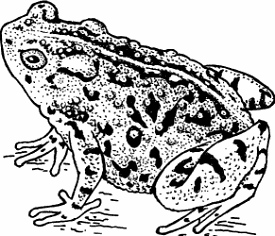
: any of numerous anuran amphibians (especially family Bufonidae) that are distinguished from the related frogs by being more terrestrial in habit though returning to water to lay their eggs, by having a build that is squatter and shorter with weaker and shorter hind limbs, and by having skin that is rough, dry, and warty rather than smooth and moist
He's such a mean little toad.
that miserable toad is lucky to have even a single friend
Recent Examples on the Web
Examples are automatically compiled from online sources to
show current usage.Read More
Opinions expressed in the examples do not represent those of Merriam-Webster or its editors.
Send us feedback.
Riparian habitats, like creeks flowing through canyons, are home to sensitive creatures including California newts, frogs and toads.—
Jaclyn Cosgrove,
Los Angeles Times,
17 Sep. 2026 The goliath birdeater is an ambush predator and mostly feeds on earthworms, insects, frogs, and toads.—Encyclopedia Britannica,
9 Sep. 2026 Kimon de Greef’s engaging new book takes as a given that the Sonoran Desert toad produces 5-MeO-DMT, a powerful natural psychedelic.—
The Week Us,
TheWeek,
2 Sep. 2026 To help in her grieving process from her father’s death, Watts and McCollough took bufo, an intense, ego-death psychedelic derived from the venom of the Sonoran Desert toad.—
Cheyenne Roundtree,
Rolling Stone,
20 Aug. 2026 See All Example Sentences for toad
Word History
Etymology
Middle English tode, from Old English tāde, tādige
First Known Use
before the 12th century, in the meaning defined at sense 1
Time Traveler
The first known use of toad was
before the 12th century
: any of numerous tailless leaping amphibians that lay their eggs in water and are distinguished from the related frogs by living on land more often, by having a build that is shorter and thicker with weaker and shorter hind limbs, and by having skin that is rough, dry and warty rather than smooth and moist


 Copy Citation