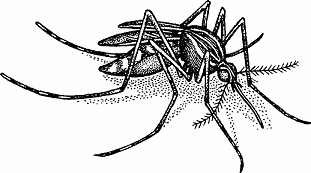
: any of a family (Culicidae) of dipteran flies with females that have a set of slender organs in the proboscis adapted to puncture the skin of animals and to suck their blood and that are in some cases vectors of serious diseases
Examples are automatically compiled from online sources to
show current usage.Read More
Opinions expressed in the examples do not represent those of Merriam-Webster or its editors.
Send us feedback.
Brian Brannon of the Orange County Mosquito and Vector Control District warned that the county has a record high of mosquitoes carrying West Nile virus.—
Charna Flam,
PEOPLE,
26 Sep. 2026 In the Southeast, warm, wet conditions may extend mosquito and cockroach activity.—
Michele Laufik,
Martha Stewart,
25 Sep. 2026 Prevent mosquitoes from breeding by eliminating standing water, the Sacramento-Yolo Mosquito and Vector Control District said.—
Don Sweeney,
Sacbee.com,
24 Sep. 2026 While mosquito activity begins to decline as temperatures cool, mosquitoes remain active into the fall.—
Christa Swanson,
CBS News,
21 Sep. 2026 See All Example Sentences for mosquito
Word History
Etymology
Spanish, diminutive of mosca fly, from Latin musca — more at midge
: any of numerous two-winged flies of which the females have a needlelike structure of the mouth region adapted to puncture the skin and suck the blood of animals
: any of numerous dipteran flies of the family Culicidae that have a rather narrow abdomen, usually a long slender rigid proboscis, and narrow wings with a fringe of scales on the margin and usually on each side of the wing veins, that have in the male broad feathery antennae and mouthparts not fitted for piercing and in the female slender antennae and a set of needlelike organs in the proboscis with which they puncture the skin of animals to suck the blood, that lay their eggs on the surface of stagnant water, that include many species which pass through several generations in the course of a year and hibernate as adults or winter in the egg state, and that include some species which are the only vectors of certain diseases see aedes, anopheles, culex


 Copy Citation