: any of a genus (Taraxacum) of yellow-flowered composite herbs with milky sap
especially: one (T. officinale) sometimes grown as a potherb and nearly cosmopolitan as a weed
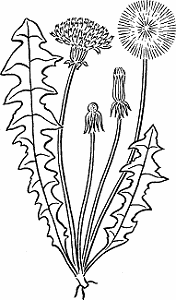
Illustration of dandelion
Examples of dandelion in a Sentence
Recent Examples on the Web
Examples are automatically compiled from online sources to
show current usage.Read More
Opinions expressed in the examples do not represent those of Merriam-Webster or its editors.
Send us feedback.
The exhibit will also highlight how the jeweler has taken inspiration from the natural world, including humble flora and fauna like dandelions and flies.—
Fairchild Studio,
Footwear News,
14 Oct. 2026 The girls do their solos, and Ericka flattens Paulina like a tractor mowing down a patch of dandelions.—
Sara Holdren,
Vulture,
29 Sep. 2026 Perennials, such as dandelions, field bindweed, ground ivy and thistles all survive the winter by storing energy reserves in deep taproots or horizontal rhizomes.—
Manjot Kaur Sidhu,
The Conversation,
10 Sep. 2026 In Maren Hassinger’s hands, bits of frayed industrial wire pinned to a wall come to resemble dandelion bristles carried away by the breeze.—
Carolina A. Miranda,
The New York Review of Books,
5 Sep. 2026 See All Example Sentences for dandelion
Word History
Etymology
Middle English dendelyoun, from Anglo-French dent de lion, literally, lion's tooth
: any of a genus of yellow-flowered weedy plants related to the daisies
especially: one with long deeply toothed stemless leaves sometimes grown as a potherb
Etymology
from early French dent de lion "dandelion," literally, "tooth of the lion"; dent derived from Latin dens "tooth" — related to dental
Word Origin
Sometimes plants are named for their resemblance, real or imagined, to animal shapes. The dandelion might not be a plant we would be quick to connect with a lion's teeth. And yet, in early French this common plant with its yellow flowers was called dent de lion, meaning literally "tooth of the lion." The dandelion leaves have deep notches along the edges. These make the leaves appear to have a row of sharp triangular teeth. In time the French name came to be spelled and pronounced as one word when it came into English, giving us dandelion today.


 Copy Citation