specifically: of or relating to the internal affairs of a state or country
intestine war
Did you know?
We bet you thought intestine was a noun referring to a part of the digestive system! It is, of course, but naming that internal body part isn't the word's only function. Both the noun and the adjective intestine have been a part of English since the 15th century, and both trace to the Latin adjective intestinus, meaning "internal," and ultimately to intus, meaning "within." Though the adjective intestine turns up much less frequently than does its anatomical cousin, it does see occasional use, especially as a synonym for civil and domestic (in contrast to foreign) applied to wars and disturbances.
Examples of intestine in a Sentence
Recent Examples on the Web
Examples are automatically compiled from online sources to
show current usage.Read More
Opinions expressed in the examples do not represent those of Merriam-Webster or its editors.
Send us feedback.
Noun
Living inside of all of our intestines is a bevy of bustling natural bacteria and other microorganisms working together called the gut microbiome.—Laura Baisas, Popular Science, 3 Dec. 2025 The amount of fat stored in the abdomen is such an important measure for health risk because that’s where so many key organs, like the heart, intestines, liver and pancreas, are located.—Helen Carefoot, Flow Space, 3 Dec. 2025 These injuries may include dental damage, laceration of the mouth or throat, or laceration or perforation of the intestine.—Matthew Robinson, MSNBC Newsweek, 2 Dec. 2025 Powerade’s blue and purple dyes combine with the natural yellow-green bile in the intestines.—Scott Lafee, San Diego Union-Tribune, 2 Dec. 2025 See All Example Sentences for intestine
Word History
Etymology
Noun
Middle English, from Middle French intestin, from Latin intestinum, from neuter of intestinus
Adjective
Middle English, from Middle French or Latin; Middle French intestin, from Latin intestinus, from intus within — more at ent-
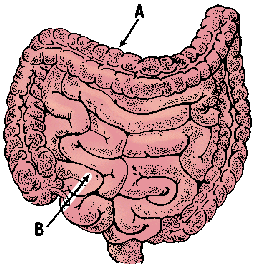
: the part of the alimentary canal that is a long tube composed of the small intestine and the large intestine, that extends from the stomach to the anus, that helps to digest food and absorb nutrients and water, and that carries waste matter to be discharged
: the tubular portion of the digestive tract that lies posterior to the stomach from which it is separated by the pyloric sphincter and consists of a slender but long anterior part made up of the duodenum, jejunum, and ileum which function in digestion and assimilation of nutrients and a broader shorter posterior part made up of the cecum, colon, and rectum which function in resorption of water from the by-products of digestion and formation of the feces—often used in plural
the movement of digested food through your intestines—Mayo Clinic Health Letter
Share