


hit; hitting

1
a
: to reach with or as if with a sudden blow
His mom told him to stop hitting his sister.
b
: to come in quick forceful contact with
the ball hit the window
He was hit by a car.
The tank was hit by enemy fire.
c
: to strike (something, such as a ball) with an object (such as a bat, club, or racket) so as to impart or redirect motion
hit a fastball into the outfield
2
a
: to cause to come into contact
She accidentally hit her head getting into the car.
b
: to deliver (something, such as a blow) by action
c
: to apply forcefully or suddenly
hit the brakes
Will someone hit the lights?
3
: to affect especially detrimentally
farmers hit by drought
Many families were hit hard during the recession.
4
: to make a request of
hit his friend for 10 dollars
—often used with uphit us up for some change
5
: to discover or meet especially by chance
prospectors hitting gold
hit a snowstorm while driving home
hit a run of bad luck
6
a
: to accord with : suit
hits public tastes
c
: to arrive or appear at, in, or on
hit town
the best time to hit the stores
The newest issue hits newsstands tomorrow.
d
of fish
: to bite at or on
will only hit live bait
e
: to reflect accurately
hit the right note
f
: to reach or strike (something, such as a target) especially for a score in a game or contest
couldn't seem to hit the basket
g
baseball
: bat sense 2b
a player who can hit .300
7
: to indulge in excessively
He repeatedly hit the bottle [=drank alcoholic beverages excessively] and, following a wild binge, was exiled to a remote post in the mountains …— Stanley Karnow
Stanley Karnow8
: to deal another card to (as in blackjack)
hit me
1
a
: to strike a blow
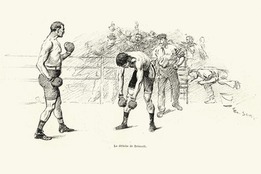
boxers hitting furiously at each other
b
: to arrive with a forceful effect like that of a blow
the storm hit
2
a
: to come into contact with something
the plate shattered when it hit
b
: attack
where the terrorists would hit next
c
of a fish
: strike sense 11b
d
baseball
: bat sense 1
next up to hit
3
: to succeed in attaining or coming up with something
—often used with on or upon
hit on a solution
4
obsolete
: to be in agreement : suit
5
of an internal combustion engine
: to fire a quantity of mixed fuel and air in the cylinders (see cylinder sense 2b)
the engine wouldn't hit
hitter
noun
1
: an act or instance of striking or forcefully coming in contact with someone or something : an act or instance of hitting or being hit
penalized for an illegal hit from behind
The bunker took a direct hit from the bombers.
2
a
: a stroke of luck
b
: a great success
The show was a big hit.
a compilation of the band's greatest hits
The pony rides were a hit with the kids.
3
: a telling or critical remark
4
baseball
: base hit
5
: a quantity of a drug ingested at one time
took a hit of LSD
6
: a premeditated murder committed especially by a member of a crime syndicate (see syndicate entry 1 sense 3c)
a hit on a rival gang leader
7
: an instance of connecting to a particular website
a million hits per day
8
: a successful match in a search (as of a computer database or the Internet)
Synonyms

Examples of hit in a Sentence
Verb
She told her son to stop hitting his sister.
She hit him hard with her purse.
The boxers hit each other with their fists.
The boxers were hitting furiously at each other.
She hit the ball right to the shortstop.
The ball hit the house.
The plate shattered when it hit the floor.
The tank was hit by enemy fire.
He was hit by a car.
The ship hit an iceberg.
Noun
The player was penalized for an illegal hit from behind.
The torpedo made a direct hit.
The pony ride was a big hit at the party.
Recent Examples on the Web
Rob Reischel, Forbes, 27 Oct. 2024
To boot, she got hit with a $19 overdraft fee because her rent check bounced after the fraud took place.
—Susan Tompor, Detroit Free Press, 27 Oct. 2024
Nancy Tartaglione, Deadline, 28 Oct. 2024
The absence of the Joker in Reeves’ Gotham has opened the door for the Penguin and Sofia to take the spotlight, and their story has proved shockingly good; The Penguin has proved to be a major hit for HBO.
—Dani Di Placido, Forbes, 28 Oct. 2024
See all Example Sentences for hit 

These examples are automatically compiled from online sources to
illustrate current usage. Opinions expressed in the examples do not represent those of
Merriam-Webster or its editors.
Send us feedback
about these examples.
Verb
The offensive line did yeoman’s work and Willis hit Reed in stride at the Jacksonville 40.
—Rob Reischel, Forbes, 27 Oct. 2024
To boot, she got hit with a $19 overdraft fee because her rent check bounced after the fraud took place.
—Susan Tompor, Detroit Free Press, 27 Oct. 2024
Noun
The ensemble cast includes Uyen An, who has appeared as a lead or supporting actress in two of the three top box office hits of all time in Vietnam; and Kieu Minh Tuan, a two-time Best Actor winner of the Golden Kite Award (Vietnam’s equivalent to the Oscars).
—Nancy Tartaglione, Deadline, 28 Oct. 2024
The absence of the Joker in Reeves’ Gotham has opened the door for the Penguin and Sofia to take the spotlight, and their story has proved shockingly good; The Penguin has proved to be a major hit for HBO.
—Dani Di Placido, Forbes, 28 Oct. 2024
See all Example Sentences for hit

Dictionary Entries Near hit

Cite this Entry
“Hit.” Merriam-Webster.com Dictionary, Merriam-Webster, https://www.merriam-webster.com/dictionary/hit. Accessed 10 Nov. 2024.
 Copy Citation
Kids Definition
hit
1 of 2 verb
hit; hitting
1
a
: to strike usually with force
hit a ball
the ball hit the house
b
: to make or bring into contact with something
tipped over and hit the floor
c
: to strike something aimed at
hit the bull's-eye
2
b
: to affect as if by a blow
3
: to arrive with a forceful effect
the storm hit at sundown
4
5
: to fire the charge in the cylinders
hitter
noun
hit
2 of 2 noun1
a
: a blow striking an object aimed at
2
a
: a stroke of luck
b
: a great success
the show was a hit
3
: base hit
4
: a single dose of a narcotic drug
5
: an instance of a computer user connecting to a given website
a million hits per day
6
: a successful match in a computer search
Love words? Need even more definitions?
Merriam-Webster unabridged

Share