The Words of the Week - Jan. 9
Dictionary lookups from Venezuela, fast food, and social media
The word kidnap has been in the news in connection with the U.S. military raid in Venezuela.
Nicolás Maduro, the ousted Venezuelan leader, insisted on Monday that he was still his country’s president and had been “kidnapped” in the U.S. military raid on Caracas that captured him and his wife two days ago.
—Benjamin Weiser et al., The New York Times, 5 Jan. 2026
Asked about Venezuelan interim president Delcy Rodriguez saying Maduro had been “kidnapped”, Trump said: “It’s alright. It’s not a bad term.”
—
We define the verb kidnap as “to seize and detain or carry away by unlawful force or fraud and often with a demand for ransom.” The word has been in use since the late 17th century, and is probably a back-formation from kidnapper, from kid + the obsolete word napper, meaning “thief.”
Lookups for expansionism have also risen in connection with the U.S. involvement in Venezuela and elsewhere.
In a sharp departure from the party’s typical partisanship, Republicans also pushed back against Trump’s military-backed expansionism, reports Agence France-Presse (AFP). House speaker Mike Johnson, a Republican, told reporters on Tuesday night that he did not think it was “appropriate” for Washington to take military action on Greenland, Politico reported.
—
We define expansionism as “a policy or practice of expansion and especially territorial expansion by a nation. Expansionism was first used in English around the turn of the 20th century.
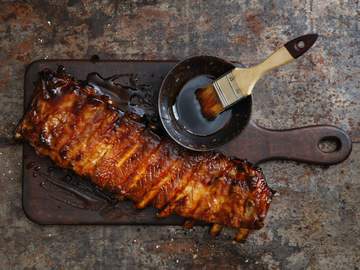
The question of whether or not a famous fast-food sandwich contains rib meat is the focus of a lawsuit, leading to a rise in lookups for rib.
The complaint, filed in the U.S. District Court for the Northern District of Illinois on Dec. 23, claims that McDonald’s deceptively markets the McRib to specifically contain meat from pork ribs through its name, branding, and appearance.
—
Rib, from the Old English ribb, has been used since before the 12th century to refer to any of the paired curved bony or partly cartilaginous rods that stiffen the walls of the body of most vertebrates and protect the viscera. In the phrase “meat from pork ribs,” rib does just that. In instances where someone orders a plate of pork ribs, however, rib does not refer to a bony or partly cartilaginous rod (in most cases, we presume) but either to “a cut of meat including a rib” or to “a boneless cut of meat (such as beef or pork) from a rib section.
Lookups for unc amidst a trend on social media of people posting “turns out unc is short for ____” and filling in the blank with uncool, unclear, unconstitutional, etc.
It turns out unc is short for “avuncular” — it means you’re sort of uncle-like.
—
Not to burst anyone’s bubble but unc is a slang term that is a shortening of the word uncle (avuncular was a good guess, though, 😉). It is often used humorously on the internet in the phrase “unc status” to imply that someone is old, getting old, or acting older than their age. Someone referred to as unc may also exhibit behaviors that are considered outdated or out of touch. In African American English, from which this sense of unc developed, unc can also be used as a term of endearment or respect for a male family member or an older community member.
To say that the word gramaungere is rare would be an understatement. Its rarity is all the more strange given that the OED defines it as “a great meal,” which means it should have great and wide applicability—as to refer to barbecue pork rib (or not rib) sandwiches, for example. However, the only known usage of gramaungere comes from poem translated from Old French into Middle English and published around the year 1400.
Charlles with this stronge powere
Schall think this a grete gramaungere …
—
In his notes on the text in an 1880 reprint of the poem, editor Sidney J. H. Herrtage wrote of gramaungere: “I can only explain this word by supposing it to mean gluttony, greediness.” The Middle English Compendium traces an alternate spelling gramaunger to the Old French grant mangier and includes a figurative usage meaning “an overambitious enterprise.”