Did You Know?
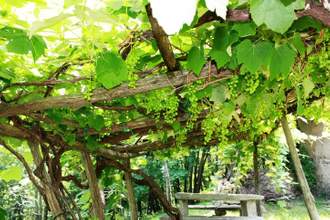
If you visited someone’s bower a millennium ago, you’d likely have found yourself at an attractive rustic cottage. A few centuries later, a visit to a bower could have involved a peek into a lady’s personal hideaway within a medieval castle or hall—that is, her private apartment. Both meanings hark back to the word’s ancient roots: it comes from Old English būr, meaning “dwelling.” Today, bower is more familiar as a word for a garden shelter made with tree boughs or vines twined together, a meaning that overlaps with that of arbor. (The adjective bowery, meaning “like a bower” or “full of bowers” is used to describe areas that resemble or are filled with these leafy pergola-like structures). Bower also features in the name of bowerbirds, any of approximately 20 different bird species native to Australia, New Guinea, and nearby islands, the males of which build more-or-less elaborate structures using twigs, moss, and other plant materials to woo potential mates during courtship.