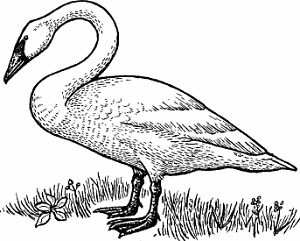
plural also swan: any of various large heavy-bodied long-necked mostly pure white aquatic birds (family Anatidae, especially genus Cygnus) that have webbed feet and are related to but larger than the geese
Examples are automatically compiled from online sources to
show current usage.Read More
Opinions expressed in the examples do not represent those of Merriam-Webster or its editors.
Send us feedback.
Noun
Since its founding in 2015, Lisa Says Gah has become known for its bowtie-pasta cardigans, checkerboard coats, and swans.—
Julia Harrison,
Architectural Digest,
10 Nov. 2026 The last includes those black-swan events that come out of left field and test a company’s resilience, from war to pandemics.—
Diane Brady,
Fortune,
22 Oct. 2026
Verb
Otherwise, though, the series is fairly loose, allowing the contestants a lot of time to swan around the villa and divide into a collection of cliques.—
Roxana Hadadi,
Vulture,
28 Oct. 2026 Kutsuna has an impish twinkle; Yamada mutely swans about in a daze like an opium fiend.—
Amy Nicholson,
Los Angeles Times,
23 July 2026 See All Example Sentences for swan
Word History
Etymology
Noun
Middle English, from Old English; akin to Middle High German swan and perhaps to Latin sonus sound — more at sound entry 1
Verb (2)
perhaps euphemism for swear
First Known Use
Noun
before the 12th century, in the meaning defined at sense 1


 Copy Citation