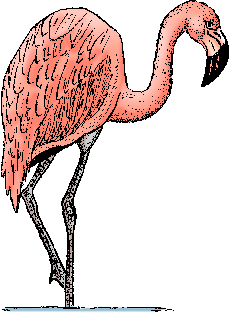
: any of several large aquatic birds (family Phoenicopteridae) with long legs and neck, webbed feet, a broad lamellate bill resembling that of a duck but abruptly bent downward, and usually rosy-white plumage with scarlet wing coverts and black wing quills
Illustration of flamingo
Examples of flamingo in a Sentence
Recent Examples on the Web
Examples are automatically compiled from online sources to
show current usage.Read More
Opinions expressed in the examples do not represent those of Merriam-Webster or its editors.
Send us feedback.
Spread across 400 acres in the hills of Santa Rosa, Safari West is home to more than 900 animals, including giraffes, zebras, rhinos, flamingos, cape buffalo and impalas.—
Catherine Garcia,
TheWeek,
21 Sep. 2026 White flamingos and red-footed falcons floated above the lagoon, framed by a long strip of dune and beach.—
Dexter Filkins,
New Yorker,
14 Sep. 2026 Programmed in a cream blouse and flanked by Edison bulbs and a flamingo, Norwood sat there ready for an interview.—
Corbin Bolies,
Variety,
14 Sep. 2026 From the shipwrecks and fur seal colonies of the Skeleton Coast to Lake Bogoria’s flamingos, Victoria Falls, and the geological formations of the Rift Valley, these spectacles are even more dramatic from above.—
Emily Baldwin,
Travel + Leisure,
11 Sep. 2026 See All Example Sentences for flamingo
Word History
Etymology
obsolete Spanish flamengo (now flamenco), literally, Fleming, German (conventionally thought of as ruddy-complexioned)
: any of several rosy-white birds with scarlet wings, a very long neck and legs, and a broad bill bent down at the end that are often found wading in shallow water
Etymology
from Portuguese flamingo "flamingo," from Spanish flamenco "flamingo," derived from Latin flamma "flame"; so called from the fiery red feathers on the underside of the wings


 Copy Citation