Illustration of cotton
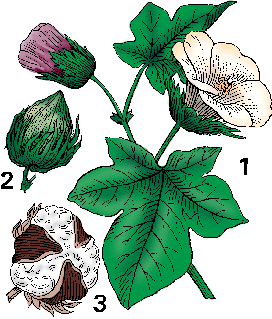
- 1 flowering branch
- 2 fruit (unopened)
- 3 fruit (partly opened)

The noun cotton, from the Arabic word quṭun or quṭn, first appeared in English in the 14th century. The substance and the word that named it were soon both culturally prominent, so English did a very English thing to do—it created a verb from the noun. By the late 15th century, cotton could mean “to form a fuzzy or downy surface on (cloth).” This verb sense (as well as other cotton-related verb meanings) is a lexical dust bunny at this point, but our modern-day uses spun from it. By the mid 16th century cotton could mean “to go on prosperously, to develop well, to succeed.” The metaphor is not difficult to see, as cotton cloth with a nice nap has indeed developed well. By the early 17th century, the verb had shifted again, and cottoning was, as it still often is, about taking a liking to someone or something. It wasn’t until the early 20th century that someone who cottoned to or on to something had come to understand it.
“Cotton.” Merriam-Webster.com Dictionary, Merriam-Webster, https://www.merriam-webster.com/dictionary/cotton. Accessed 27 Oct. 2026.
 Copy Citation