: a small cylindrical bead of glass or plastic used for trimming especially on women's clothing
Did you know?
What is the origin of bugle?
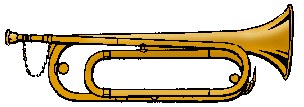
In early English, the word bugle meant “wild ox.” The horns of oxen were made into signaling devices for soldiers and hunters, first called bugle horns. Later this was shortened to bugle.
Examples of bugle in a Sentence
Recent Examples on the Web
Examples are automatically compiled from online sources to
show current usage.Read More
Opinions expressed in the examples do not represent those of Merriam-Webster or its editors.
Send us feedback.
Noun
Leather, suede, velvet, bugle beads, inky denim, double-face wool.—
Lisa Lockwood,
Footwear News,
17 Feb. 2026 The signage lets viewers know it is made from silk chiffon and embroidered with bugle beads.—
Ray Mark Rinaldi,
Denver Post,
6 Apr. 2026
Verb
The former are the stomping grounds of nimble bighorn sheep, while the latter are often filled with bugling elk.—
Bailey Berg,
Forbes.com,
15 June 2026 In autumn, crowds thin and elk herds swell and bugle amongst the sunset-hues of the aspen and cottonwood trees.—
Wendy Altschuler,
Forbes,
27 Sep. 2024 See All Example Sentences for bugle
Word History
Etymology
Noun (1)
Middle English bugle, bugill, borrowed from Anglo-French bugle, borrowed from Medieval Latin bugula, of uncertain origin; perhaps from the same source as Late Latin bugillōn-, bugillō, if it designates the same plant
Noun (2)
Middle English, buffalo, instrument made of buffalo horn, bugle, from Anglo-French, from Latin buculus, diminutive of bos head of cattle — more at cow
: a brass musical instrument like the trumpet but without valves
bugleverb
bugler
-glər
noun
Etymology
Noun
Middle English bugle "wild ox," from early French bugle (same meaning), from Latin buculus "young steer"
Word Origin
In early English the word bugle meant "wild ox." The horns of oxen were made into signaling devices for soldiers and hunters, first called bugle horns. Later this was shortened to bugle.