bugle

verb

bugled; bugling ˈbyü-g(ə-)liŋ How to pronounce bugle (audio)

intransitive verb

1
: to sound a bugle
2
: to utter the characteristic rutting call of the bull elk

Did you know?

What is the origin of bugle?

In early English, the word bugle meant “wild ox.” The horns of oxen were made into signaling devices for soldiers and hunters, first called bugle horns. Later this was shortened to bugle.

Examples of bugle in a Sentence

Recent Examples on the Web
Examples are automatically compiled from online sources to show current usage. Read More Opinions expressed in the examples do not represent those of Merriam-Webster or its editors. Send us feedback.
September brings cooler temperatures and fewer visitors, along with fall colors and bugling elk. Taryn Shorr-McKee, Travel + Leisure, 17 May 2026 Visit Yosemite National Park in the fall for vibrant colors and open access to popular trails like Mist Trail, Great Smoky Mountains National Park in the spring for gorgeous wildflower blooms, or Rocky Mountain National Park in September for golden Aspen tree hikes and bugling elk. Jessica Chapel, Condé Nast Traveler, 6 Sep. 2025 Some cheered the kids on with blasts from conch shells; another boater bugled tunes. Debra Utacia Krol, USA Today, 2 Sep. 2025 Deafening screams vindicated my decision to bugle again and all resumed as before, save that the chorus was even more intense. Jim Tschetter, Outdoor Life, 27 Aug. 2025 See All Example Sentences for bugle

Word History

First Known Use

1593, in the meaning defined at sense 1

Time Traveler
The first known use of bugle was in 1593

Browse Nearby Words

Cite this Entry

“Bugle.” Merriam-Webster.com Dictionary, Merriam-Webster, https://www.merriam-webster.com/dictionary/bugle. Accessed 9 Jun. 2026.

Kids Definition

bugle

noun
bu·​gle
ˈbyü-gəl
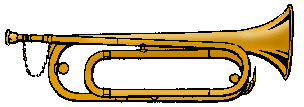
: a brass musical instrument like the trumpet but without valves
bugle verb
bugler
-glər
noun
Etymology

Middle English bugle "wild ox," from early French bugle (same meaning), from Latin buculus "young steer"

Word Origin
In early English the word bugle meant "wild ox." The horns of oxen were made into signaling devices for soldiers and hunters, first called bugle horns. Later this was shortened to bugle.

More from Merriam-Webster on bugle

Love words? Need even more definitions?

Subscribe to America's largest dictionary and get thousands more definitions and advanced search—ad free!

More from Merriam-Webster