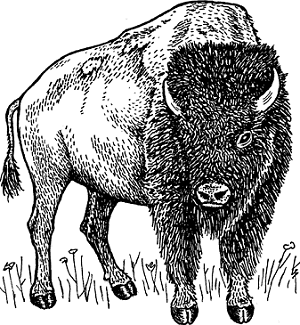
especially: a large North American bison (Bison bison) that has a dense coat of dark brown fur with a shaggy mane on the head and lower neck, short hollow horns, and heavy forequarters with a large muscular hump over the shoulders and that formerly was abundant in North America but is now reduced to small populations of plains and prairies chiefly of the central U.S. and Canada : american bison compare european bison
(2)
: the flesh of the buffalo used as food
2
: any of several suckers (genus Ictiobus) found mostly in the Mississippi River valley
Greeks traveled much of the ancient world, and Greek authors gave names to many unfamiliar animals. The African gazelle they called boubalos. Later, the Romans borrowed this Greek word and used it for gazelle and for wild ox. In Latin the form was first bubalus and later bufalus. This Latin word for wild ox passed into Italian as bufalo and into Spanish as búfalo. From these languages, the English then picked up the word, spelling it buffalo, and when English settlers arrived in America, they gave the name to the big, shaggy animal that is also called bison.
Verb
I'm not some newcomer that you can buffalo with that nonsense.
in this debate I refuse to be buffaloed by a flurry of irrelevant issues
Recent Examples on the Web
Examples are automatically compiled from online sources to
show current usage.Read More
Opinions expressed in the examples do not represent those of Merriam-Webster or its editors.
Send us feedback.
Noun
That relic came under scrutiny in 2007 after dental experts pointed out that the 3-inch tooth’s characteristics were incompatible with the dimensions of a human tooth and most likely belonged to a cow or a buffalo.—Deepa Bharath, Los Angeles Times, 1 Mar. 2026 The cheese, a buffalo mozzarella, was soft and melty.—Alana Al-Hatlani, Southern Living, 16 Feb. 2026
: a large shaggy-maned North American mammal with short horns and heavy forequarters with a large muscular hump
Etymology
Noun
from Italian bufalo and Spanish búfalo, both meaning "wild ox," from Latin bubalus, bufalus "wild ox, African gazelle," from Greek boubalos "African gazelle," probably from bous "ox, cow" — related to butter
Word Origin
The Greeks traveled over much of the ancient world, and Greek authors gave names to a number of unfamiliar animals. The African gazelle they called boubalos, apparently deriving part of the name from the Greek word bous, meaning "ox." Later the Romans borrowed this Greek word, which they used for "gazelle" and for "wild ox." In Latin the form was first bubalus and later bufalus. This Latin word for wild ox later passed into Italian as bufalo and into Spanish as búfalo. From these languages the English picked it up and gave it the spelling buffalo. When English settlers arrived in America, they gave the name buffalo to the big, shaggy animal that scientists prefer to call bison.