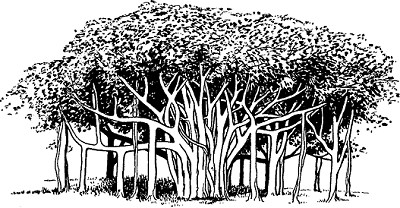
: a large fig tree (Ficus benghalensis) native to India and Pakistan that starts as an epiphyte and has spreading branches which send out aerial roots that grow down to the ground and form secondary trunks around the host tree
The banyan kills the host tree by preventing its trunk from growing. After the host dies, the banyan continues to grow. Eventually, one tree appears to be an entire forest.—National Geographic World
Illustration of banyan
Examples of banyan in a Sentence
Recent Examples on the Web
Examples are automatically compiled from online sources to
show current usage.Read More
Opinions expressed in the examples do not represent those of Merriam-Webster or its editors.
Send us feedback.
Eywa is a luxury residence in Dubai inspired by the banyan tree.—
Jim Dobson,
Forbes.com,
8 June 2026 Villains could hide in the giant banyan tree or lurk in the spookily dark new flotation room; a fight scene might involve someone crashing down the waterfall-wall in the centre of the wellness centre.—
Condé Nast,
Condé Nast Traveler,
2 June 2026 On a street lined with sinewy banyan trees in Taipei’s Songshan District, school administrator Huang Huiming agrees that Beijing’s bet might not pan out.—
Ann Scott Tyson,
Christian Science Monitor,
13 Apr. 2026 The best tables at the indoor-outdoor restaurant sit beneath a gargantuan banyan tree.—
Terry Ward,
AFAR Media,
9 Jan. 2026 See All Example Sentences for banyan
Word History
Etymology
earlier banyan Gujarati trader, from Portuguese banean, probably from Tamil vāniyan trader, from Sanskrit vāṇija; from a tree of the species in Iran under which such traders conducted business


 Copy Citation