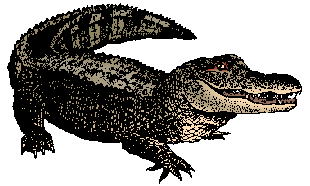
: either of two large carnivorous, thick-skinned, long-bodied, aquatic, crocodilian reptiles (Alligator mississippiensis of the southeastern U.S. and A. sinensis of China) that have a broad head with a slightly tapered, long, rounded, U-shaped snout and a special pocket in the upper jaw for reception of the enlarged lower fourth tooth
Examples are automatically compiled from online sources to
show current usage.Read More
Opinions expressed in the examples do not represent those of Merriam-Webster or its editors.
Send us feedback.
The companies that are familiar with this moat—and feed their resident alligators—will be well-positioned to safeguard their kingdoms.—
Srinivas Velamoor,
Forbes.com,
23 Sep. 2026 The charges against Peters come just months after he was charged by Florida authorities after allegedly firing a gun at an alligator during a live stream, according to court documents.—
Bill Hutchinson,
ABC News,
22 Sep. 2026 Infrared spectroscopy showed that the fossil enamel looked a bit like that of the modern alligator, and its carbonate content matched that of modern reptilian enamel.—
Jacek Krywko,
ArsTechnica,
20 Sep. 2026 The Endangered Species Act is credited with bringing back iconic animals — including the bald eagle, American alligator and California condor — from the brink of extinction.—
Matthew Brown,
Chicago Tribune,
18 Sep. 2026 See All Example Sentences for alligator
Word History
Etymology
Spanish el lagarto the lizard, from el the (from Latin ille that) + lagarto lizard, from Vulgar Latin *lacartus, from Latin lacertus, lacerta — more at lizard


 Copy Citation