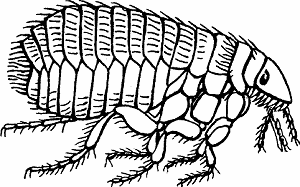
: any of an order (Siphonaptera) of small wingless bloodsucking insects that have a hard laterally compressed body and legs adapted to leaping and that feed on warm-blooded animals
Examples are automatically compiled from online sources to
show current usage.Read More
Opinions expressed in the examples do not represent those of Merriam-Webster or its editors.
Send us feedback.
The pandemic probably began with fleas that bit rodents in Africa, and the disease raced along trade routes, killing up to 100 million people.—
Jen Christensen,
CNN Money,
8 Oct. 2026 Finally, pneumonic plague occurs when the bacterium infects the lungs—typically through inhalation of infectious droplets rather than flea bites.—
Claire Maldarelli,
Scientific American,
7 Oct. 2026 Plague is an infectious disease caused by the bacteria Yersinia pestis, usually found in small mammals and their fleas, WHO said.—
Don Sweeney,
Sacbee.com,
6 Oct. 2026 Plague outbreaks in the Middle Ages killed millions, due to widespread, common flea and rat infestations and less understanding of how to prevent disease from spreading.—
News Editor,
CBS News,
6 Oct. 2026 See All Example Sentences for flea
Word History
Etymology
Middle English fle, from Old English flēa; akin to Old High German flōh flea
First Known Use
before the 12th century, in the meaning defined above
Time Traveler
The first known use of flea was
before the 12th century
: any of the order Siphonaptera comprising wingless bloodsucking insects that have a hard laterally compressed body and legs adapted to leaping and that feed on warm-blooded animals see cat flea, chigoesense 1, dog flea, rat flea, sand flea, sticktight flea


 Copy Citation