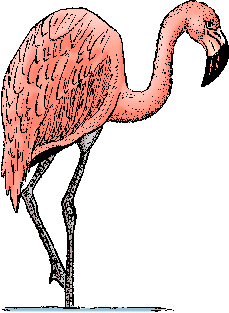
: any of several large aquatic birds (family Phoenicopteridae) with long legs and neck, webbed feet, a broad lamellate bill resembling that of a duck but abruptly bent downward, and usually rosy-white plumage with scarlet wing coverts and black wing quills
Illustration of flamingo
Examples of flamingo in a Sentence
Recent Examples on the Web
Examples are automatically compiled from online sources to
show current usage.Read More
Opinions expressed in the examples do not represent those of Merriam-Webster or its editors.
Send us feedback.
Teal is coming out on top, with its mesmerizing mix of sea-blue and green undertones, as well as flamingo pinks flecked with iridescent shimmer particles.—
Ariel Wodarcyk,
InStyle,
18 July 2026 That includes pedal boats shaped like swans, dragons, ducks and flamingos, as well as kayaks, canoes and stand-up paddleboards.—
Tiney Ricciardi,
Denver Post,
17 July 2026 Some of the most common toxic plants for dogs and cats in this category include pothos, peace lilies, philodendrons, ZZ plants, dumb cane, calla lilies, Chinese evergreen, elephant ear, Swiss cheese plant and flamingo plant.—
Ryan Brennan,
Fort Worth Star-Telegram,
14 July 2026 Common examples include dumb cane, calla lily, pothos or devil’s ivy, peace lily, Chinese evergreen, elephant ear, ZZ plant, philodendron, Swiss cheese plant and flamingo plant.—
Ryan Brennan,
Miami Herald,
14 July 2026 See All Example Sentences for flamingo
Word History
Etymology
obsolete Spanish flamengo (now flamenco), literally, Fleming, German (conventionally thought of as ruddy-complexioned)
: any of several rosy-white birds with scarlet wings, a very long neck and legs, and a broad bill bent down at the end that are often found wading in shallow water
Etymology
from Portuguese flamingo "flamingo," from Spanish flamenco "flamingo," derived from Latin flamma "flame"; so called from the fiery red feathers on the underside of the wings


 Copy Citation