Why is the letter ‘Z’ associated with sleeping?
A cartoon origin story
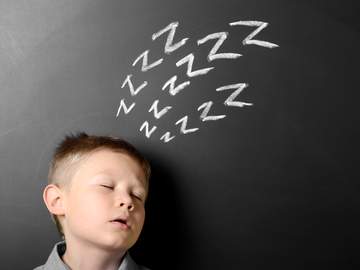
The English language has had a long-standing relationship between sleep and the letter Z, but where did this link come from? We could chalk it up to simple onomatopoeia, and view it as an attempt to replicate the sound that many of us make when we snore.
Other languages have their own individual onomatopoetic ways to depict snoring, including rrrrrr in Spanish and xppp in Russian. But the zzz is globally recognized, thanks to the popularity of American comics. The first instance of zzz being used as shorthand for sleep has been attributed to the early 20th century comic strip Katzenjammer Kids, which in 1903 used it in portraying a man snoozing in a hammock.
Figuring out how to depict sleep in comic strips and comic books is a tricky task. Sometimes sleep has been depicted as grrk, honk-shoo, ZZRRGGHH, or just snore. On some occasions an illustrator has taken artistic license by adding a little drawing of a saw and a log to imply the rhythmic rumble of the idiom “sawing logs.” In time, that phrase evolved with technology into “snoring like a chainsaw.”
But the letter Z won out. In the 1950s, the verb zonk, meaning “to pass out from or as if from alcohol or a drug,” entered the lexicon, and in the 1980s, cartoonist Jim Davis used one big Z to demonstrate sleep in the Garfield comics.
You needn’t worry much about how to pronounce zzz, as it’s usually not meant to be pronounced out loud. However, in the 1960s the phrase get some Zs became common slang, and in cases such as this the Z is pronounced just as the letter is.