Why do we say 'break a leg'?
Theater has given English many gifts. This one is a little hard to explain.
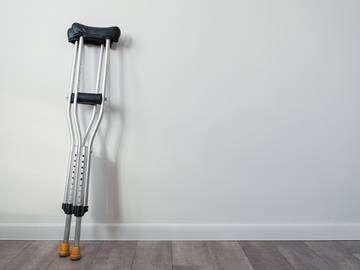
It is common (or alleged to be common) in the theater to say 'break a leg' to a performer in lieu of 'good luck' just before they go out on stage. We do not know why the leg is referenced (as opposed to, say, a toe, or some other less important appendage or limb), or where the expression came from.
(The impulse to avoid the words 'good luck' seems illogical, but is in line with a number of other superstitions in the theater world, such as insisting on referring to Macbeth as ‘the Scottish play,’ or refraining from whistling backstage.)
One possible origin of 'break a leg' is the German expression 'Hals(bruch) und Beinbruch!' (which translates, cheerfully, as "may you break your neck and your leg”); this can be found in a hunting context from the very beginning of the 20th century, and in a theatrical one about a decade later. But we don't know why the Germans say that either. Another theory (albeit with puzzling implications) is that it came from John Wilkes Booth breaking his leg in Ford's Theatre after assassinating Abraham Lincoln in 1865. Yet another theory is that 'break and leg' comes from the habit of audiences in Elizabethan England stomping their feet, or banging chairs on the ground—the idea being that sufficient audience enthusiasm might result in a broken leg.
Another source, although one not often encountered, is that the expression started in the world of vaudeville dance and comedy, and made the transition from there to legitimate theater. Break a leg begins to be used as a theatrical expression of good luck in the 1920s and 1930s, about the same time that it was appearing in Variety magazine in describing an enthusiastic mode of dance. Again, the why of wishing someone a broken leg goes unanswered.
Step doesn’t try to break a leg, although plenty animated when becoming the minstrel.
—Variety, 21 Aug. 1929
Next, “Perfumes” for a lovely Rasch number and an adagio trio with two new tricks that are hair-raising. There’s nothing left for adagio dancers to do now but break a leg.
—The Slates depart from the present break-a-leg conventional fashion in the dancing and they mix in some rough comedy.
—Nine sold minutes of straight dancing by two boys, in the modern strenuous break-a-leg automatic fashion.
—
There is not, nor is there likely to be, any firm agreement on the origins of this expression. Language, especially when of the slang or colloquial variety, resists most attempts at establishing certainty. Sometimes it is best to enjoy having a number of possible explanations, and simply wallow in the ambiguity.