The Words of the Week - Dec. 5
Dictionary lookups from social media, Southeast Asia, and the bayou
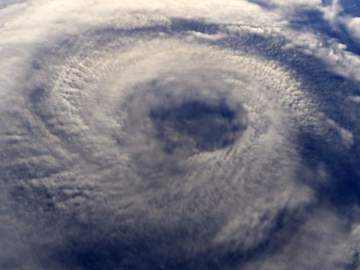
Deadly storms across Southeast Asia led to a rise in lookups for monsoon.
This year’s monsoon season has been unusually intense, partly because of La Niña—a weather phenomenon in which strong winds push warm water across the Pacific toward East Asia, creating conditions for storms to form.
—Amelia Nierenberg et al., The New York Times, 1 Dec. 2025
We define three senses of monsoon: “a periodic wind especially in the Indian Ocean and southern Asia,” “the season of the southwest monsoon in India and adjacent areas that is characterized by very heavy rainfall,” and “rainfall that is associated with the monsoon.” The word monsoon came to English from a now-obsolete Dutch word, monssoen, which in turn came from the Portuguese monção, and before that the Arabic mawsim, meaning “time, season.”
War crime has been in the news lately in connection with military strikes in the Caribbean.
The Secretary of Defense has faced furious backlash and accusations of committing war crimes over strikes which were carried out in the Caribbean on September 2. The initial strike on the drug-smuggling vessel allegedly killed all but two members of the suspected cartel on board, but a second strike reportedly eliminated the duo as they clung to debris in the water.
—
We define war crime (usually encountered in plural) as “a crime (such as genocide or maltreatment of prisoners) committed during or in connection with war.” Its first-known use in English dates to the late 1800s.
More people than usual looked up the word misogynoir after it was used by the singer-songwriter SZA on social media.
SZA is coming to Cynthia Erivo’s defense amid a wave of recent online bullying aimed at the Wicked star. … the R&B hitmaker shared her two cents about why it shouldn’t be considered “too woke” to speak up. “It’s CLASSIC Misogynoir!” SZA wrote of the content targeting Erivo.
—
We define misogynoir as “hatred of, aversion to, or prejudice against Black women.” The word is a blend of misogyny and the French word noir, meaning “black.” Coinage of the word is credited to the Black scholar and activist Moya Bailey, who used it in a posting to the Crunk Feminist Collective blog in 2010.
Affordability has been much in the news lately, and its use was notable in a Cabinet meeting this week.
President Donald Trump blasted Democrats during his ninth Cabinet meeting for complaining about inflation after prices have fallen for products such as gasoline and groceries, part of a broader lament that his administration wasn’t getting the credit it deserved. “The word affordability is a con job by the Democrats,” Trump said Dec. 2. “The word affordability is a Democrat scam.”
—
Affordability refers to the ability of something to be afforded, that is, to have a cost that is not too high. The adjective affordable, from which affordability was formed, dates to the mid-1600s, while affordability has been in use since the early 1900s. Both words, of course, come from the verb afford, which can be traced all the way back to the Old English verb geforðian, “to send out, promote, carry out.”
Pulldoo is another name for the American coot, a common American marsh bird (Fulica americana) having the bill, edge of wings, and upper tail coverts white, the rest of the plumage slaty and darker on the back than below. The bird has also gone by names such as mudhen and blue peter. Pulldoo comes from Louisiana French poule d’eau, which literally means “water hen.” It is not very common these days, however (more common is the Cajun pouldeau), and may only be familiar to the oldest coots among us.
… the pulldoo, a Southern water-fowl, that arrives in the night and surprised by his numbers.
—In 2014, the Southwest Louisiana Lake Charles Convention and Visitors Bureau reported that Cameron draws 140,000 birdwatchers annually to watch migratory fowl. Cameron is home to half of the state’s blue geese population and more than 150 million pouldeau.
—