The Words of the Week - Aug. 21
Dictionary lookups from baseball, politics, and climate
The adjective woke, which is usually in or hovering around the top lookups for the week, was looked up even more than usual this week, owing to its prominence in various news stories and opinion pieces.
Like many facets of American culture, “woke” was derived from African American Vernacular English, meaning to “alert to racial prejudice and discrimination.” The term has been central to Black political consciousness from its adoption in the 1930s, to its use in both iterations of the Black Lives Matter movement in 2014 and 2020, to its appropriation by non-Black people to discuss matters of gender and queerness …
—Kofi Mframa, USA Today, 18 Aug. 2026
We define several senses of the adjective woke, including “aware of and actively attentive to important societal facts and issues (especially issues of racial and social justice)." As noted by Kofi Mframa in the quote above, woke developed in African American English and has been used to describe a state of active attentiveness to issues of racial and social justice since the mid-late 20th century. It gained widespread use and attention beginning in 2014 as part of the Black Lives Matter movement. Woke can also be used, as in “woke values” or “woke language,” to mean “reflecting the attitudes of woke people.” Woke is also now commonly used as a pejorative to describe people, policies, practices, etc., seen as too politically liberal or progressive.
The adjective sylphlike was used in a prominent news story about an aide to President Donald Trump, leading to a spike in lookups.
The furor intensified the spotlight on this seldom-heard-from and sylphlike woman who has long fascinated and frustrated people around the president.
—
One who is sylphylike resembles a sylph, which is an elemental being in the theory of Paracelsus that inhabits air. Paracelsus, a German-Swiss physician (1493–1541), was a man with a vivid imagination. He concocted an elaborate theory of ruling “elemental spirits”: gnomes controlled the earth, salamanders fire, undines water, and sylphs (graceful beings whose name in English is from New Latin sylphus) the air. While his sylph idea has long since been discounted as fairy-tale fantasy, the creatures remain as romantic figures of literature, art, and ballet, where woodland sylphs are often depicted enchanting unwary males.
Drought was a top lookup amidst ongoing severe water shortages.
And in the last quarter-century, relentless drought intensified by climate change has sapped the river’s flow and left its reservoirs severely depleted. Both Lake Mead and Lake Powell, the nation’s largest reservoirs, are at record low levels and continue to decline.
—
We define the relevant sense of drought as “a period of dryness especially when prolonged; specifically one that causes extensive damage to crops or prevents their successful growth.” The word traces back to an Old English verb, drūgian, meaning “to dry up.”
A sports-related use of the verb blank became a top lookup this week.
Brewers tie largest shutout in modern era, blank Mariners 22-0
—
The word blank has many uses as an adjective, noun, and verb. The relevant use in the headline above is “to keep (an opponent) from scoring.” The first-known use of this sense of blank appeared in the late 1800s.
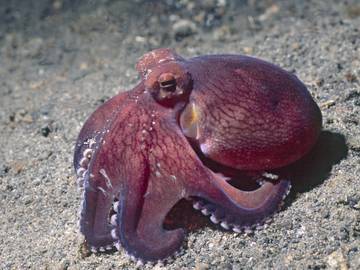
Octopal sure does sound like it could be a noun meaning “a friend who is an octopus” but—at least for now—it is merely an adjective used to describe people or things that resemble or have characteristics of an octopus. It is not an especially common word but can be useful for eight-armed objects, or perhaps for friends who eject inky substances when frightened, or cephalopod mollusks who primarily eat lobsters and crabs (and sometimes plankton).
… across the canal, two or three well-lit, tall, rounded windows, half shaded with gauze or tulle, reveal an octopal chandelier …
—… the octopal play of Lukáš Dostál in goal, where he halted 45 pucks.
—