The Origins of Daredevil
Hint: they've been around for a while
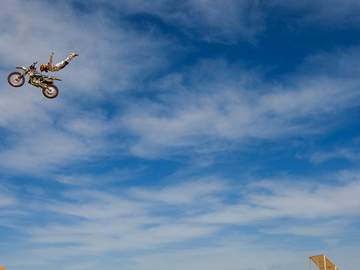
The year was 1966, and a soon-to-be-famous Evel Knievel had a plan to drum up business for his motorcycle shop in Moses Lake, Washington: He’d jump his motorcycle over 40 parked cars, some rattlesnakes, and a caged cougar. He didn’t quite make the jump (he landed in the pile of rattlesnakes) but somehow he escaped unscathed, and a star was born. Most called him unhinged, and some called him a genius, but almost everyone called him a daredevil.
Evel Knievel lived up to this descriptor. When used as a noun, a daredevil is a “recklessly bold person”; as an adjective it describes the “recklessly and often ostentatiously daring.” The word first appeared in English in the late 17th century, and at first it seems to have be applied to those who literally dared the devil: atheists.
The fulsom Debauchery of the first of the Brothers Reigns, and the Devilish Godliness of the second, has made such Dare Devils of half the Nation, rendring 'em of no Religion, as a necessary step to one that was worse than none….
Anon., A Second modest enquiry into the causes of the present disasters in England, 1690
The word gained popularity throughout the 18th and 19th centuries, likely due to the popularity of circus performers. In the burgeoning industrial world, entertainment-based daredevils were more popular than ever, whether walking on high wires, jumping bicycles through flaming hoops, or going over Niagara Falls in barrels. However, circus performers and thrill seekers aren’t devilish or sinister, so why is the word devil used in this fashion?
The word’s early use, in which it was applied to atheists, gives us a clue: it isn’t about labeling the person a devil, but “one who dares the devil.” A similar word formation is seen in scarecrow. The field-dwelling decoy isn’t a bird, but it scares birds away. In other words, it’s “one who scares crows.” Pickpocket was formed this way, too, as in “one who picks pockets,” or someone who steals.