The Origin of O'clock
The apostrophe that ate a whole word
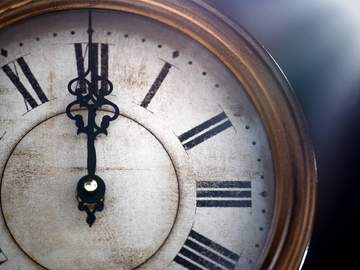
If someone says something is happening at 5 o’clock, it’s understood that it’s a reference to either sunrise or happy hour, and not the surname of an Irish family whose defining trait is punctuality. O’clock is an adverb that always follows a numeral to indicate the time of day. It’s almost exclusively a whole number, as you’d never say, “it’s one-thirty o’clock” (that just sounds odd).
O’clock is a shortening of the phrase “of the clock,” which itself comes from the Middle English “of the clokke.” Mechanical clocks, with faces and automatic hand movements, originated in the 14th century in Europe. These devices replaced traditional light-based timekeeping methods (sundials) that had been used for centuries. When someone said “of the clokke,” it referred to the position of the mechanical hands on the clock’s face. As modern English evolved, the term shortened to o’clock. While many modern timekeeping devices now use numbers, and lack the 1-12 found on a traditional clock face, it’s still standard to say o’clock as if you were imagining one.
The word clock didn’t exist in English prior to the 14th century; the word was added to our language during that century to refer to the new technology. Many early clocks had a chime or gong to mark certain times, and, unsurprisingly, clock is related to the earlier Old French word cloque, meaning “bell.”