16 Food Words Recently Added to the Dictionary
A smorgasbord of words for food and drink
Definition
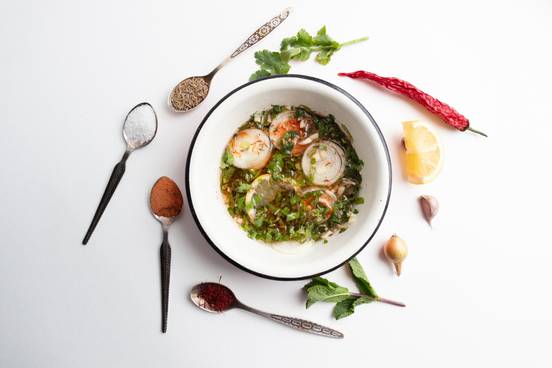
: a savory North African sauce or marinade typically made with finely chopped parsley and cilantro, minced garlic, olive oil, lemon juice, spices (such as cumin and paprika) and hot peppers
About the Word
Chermoula shares some similarities with other savory concoctions from around the world, including the Argentinean chimichurri. While the word chimichurri is thought to hail from the Basque word zurrumurru, meaning “noise, rumor,” chermoula has more literal origins. It can be traced back to the Late Latin word salimuria (“brine for pickling”), which later passed into an Ibero-Romance work with the same meaning, then into North African Arabic in the form of šarmūla, and finally into French, where it took the form adopted by English users in the 1970s.
Example
Many of [Amal] Alaoui’s dishes come directly from family recipes using time-honored techniques. She prides herself on the accurate replication of these flavors, going so far as importing spices directly from Morocco to ensure that there are no colorants or commercial additives. … “We can make our own preserved lemons, make our own spiced olives and our own chermoula all here in Atlanta, too,” she said.
—Su-Jit Lin, The Atlanta-Journal Constitution, 20 Sept. 2026
Definition
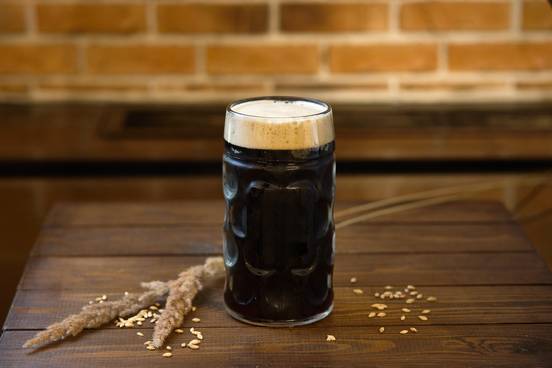
: a dark-colored, slightly sweet lager typically brewed with roasted malt
About the Word
The word dunkel, often capitalized, is a borrowing of the German word meaning “dark,” which traces further back to the Old High German word tunkal, thunchel.” In German the beer in the definition is marketed as _Münchner Dunkel or Bayrisch Dunkel. Don’t confuse dunkel, which refers to a dark lager, with another recently added word, dunkelweizen, which refers to a dark ale typically brewed with roasted malted wheat. That word combines dunkel with Weizen, meaning “wheat” (as in hefeweizen).
Example
All of their beers have a fresh, clean, balanced flavor. This delicious dark five percent dunkel is no different. The mouthfeel is soft, smooth and silky. The taste is sweet, dark malt with just a soupçon of French roast coffee, followed by a tingly tongue massage from this exquisitely carbonated beer.
—
Definition
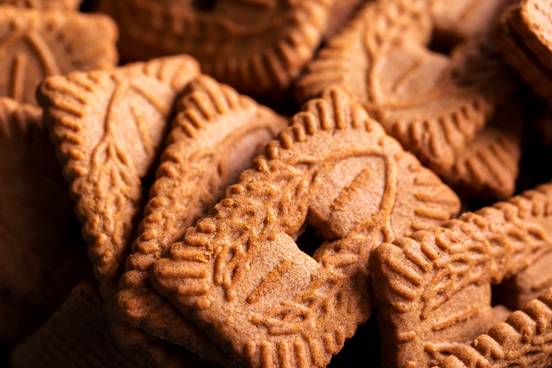
: a sweet crisp cookie made with brown sugar and flavored with spices (such as cinnamon, cardamom, and nutmeg)
About the Word
The word for this delicious cookie (which is often used in cookie butter, a sweet, popular spread) comes from the Dutch word speculatie, meaning, perhaps unsurprisingly, “spice cookie.” From there, however, etymologists speculate that this Dutch use of speculatie is a concretization of another sense, “pleasure, delight” (earlier, “reflection, contemplation”). Speculatie is borrowing from Middle French speculacion and Late Latin speculātiō, making speculoos kin to the English verb speculate.
Example
Crushed speculoos make for an ideal crumb crust because they hold together firmly with melted butter yet stay crisp after chilling, providing some necessary crunch.
—
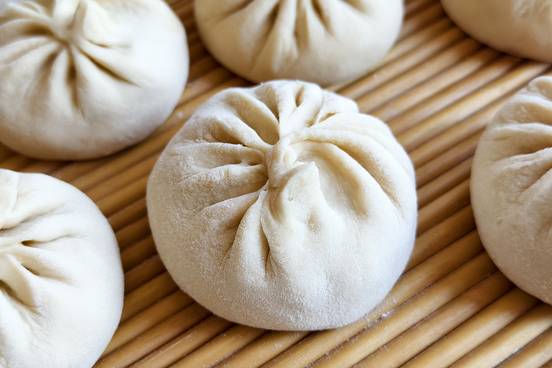
Definition
: a soft bread bun that is stuffed with a sweet or savory filling (such as fruit or meat) and is cooked by steaming or sometimes baking; also : the bun cooked without a filling and used as bread
About the Word
In the Beijing dialect of Chinese, bāo can be used as a verb to mean “to wrap, surround,” and as a noun meaning “bundle, package, envelope.” Combined with the noun suffix -zi, it refers to the delicious sweet and savory bun of the definition above. English speakers tend to use bao more often than the variant baozi. Acceptable plural forms for the English bao are bao and baos or the less common baozi and baozis.
Example
… when I was assigned a story about Chinese breakfasts, I dutifully queued at a bun shop outside a Beijing park. I snagged baozi stuffed with their bestseller soy sauce pork also an eggplant and green pepper, plus one with pickled veg.
—

Definition
: a tart, low-alcohol ale typically brewed with malted wheat, coriander, and sea salt and often with fruit
About the Word
Although gose only made a splash on the craft beer scene relatively recently, the word for this unique brew has been in use in English since around the turn of the 19th century. It’s a borrowing of the German Gose, and probably named after Gose, the name of a stream near Goslar, a town in central Germany where the beer was first brewed.
Example
Just five years ago, no one would’ve predicted that the gose would go full Hollywood. In fact, until recently, the style was so obscure, so nearly extinct, that in 2011 it didn’t even merit an entry in Garrett Oliver’s encyclopedic, 960-page The Oxford Companion to Beer. … In the late spring of 2012, South Carolina’s Westbrook Brewing Co. released a canned version of the style, sans the usual stateside flourishes. Tangy, low in alcohol and showing just a hint of coriander spice, it became a massive hit, setting in motion a trend that would lead to the release of dozens of American riffs on the style.
—
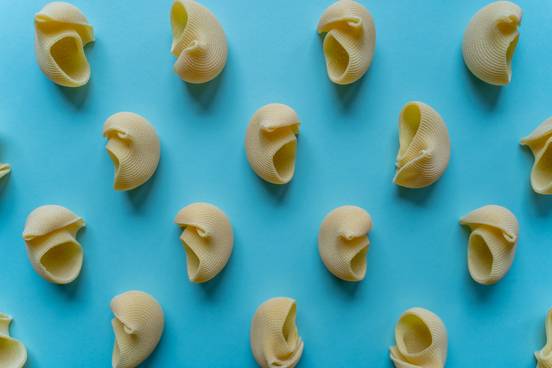
Definition
: pasta shaped like a snail’s shell
About the Word
This pasta is sometimes described as a cross between seashell-shaped and elbow-shaped pastas, though it is not as common as either of those (if you can find it, our humble editors do recommend it). The word lumache, as one might guess, comes from the plural of the Italian lumaca, meaning “snail, slug” and further on back to a Latin word with the same meaning.
Example
We think the ideal pasta shape for mac and cheese is not the traditional elbow, but rather a shape called lumache …
—

Definition
: a thin, crisp, heart-shaped puff pastry that is usually sprinkled with sugar before baking
About the Word
Palmier is a French borrowing, and in French the word can refer to the same delicious pastry as well as to a palm tree. Your mileage may vary as to whether you think the sweet treat looks like a heart or palm leaf, of course, in which case we can also suggest elephant ear.
Example
Palmiers are striking cookies made with puff pastry dough that is folded and sliced so the cookies back into a graceful form resembling palm leaves. The cookies are sprinkled with sugar before baking, which gives them a very crisp, flaky texture and rich, caramelized flavor.
—
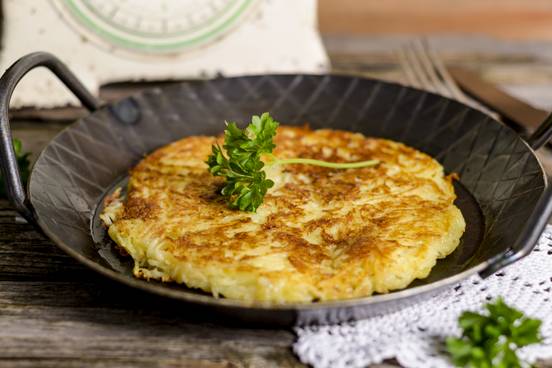
Definition
: a potato pancake that is made without eggs and that is sometimes prepared or served with additional ingredients (such as onions, herbs, cheese, or ham)
About the Word
Rösti (sometimes spelled rosti or less commonly roesti or roschti), is a borrowing from German, and before that the Swiss German Rööschti, which is short for Härdöpfelrööschti, meaning “pan-cooked potatoes.” Whatever you call this potato pancake, don’t call us late for breakfast.
Example
The classic rösti is a Swiss dish said to have originated in the 16th century as a hearty breakfast food for farmers. There is no single master recipe as such, and a variety of methods can produce a good rösti, which should be golden and crisp outside and soft and yielding within.
—
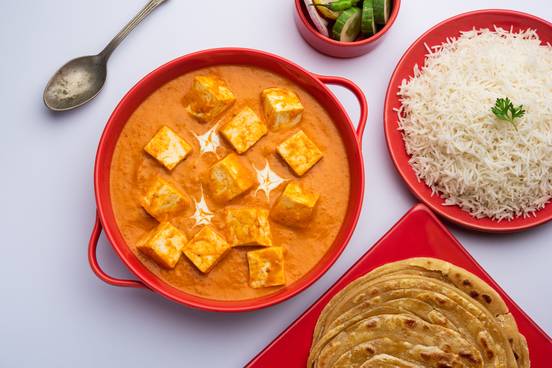
Definition
: a soft white unripened buffalo or cow’s milk cheese of India that is strained until firm and often cut into cubes before cooking
About the Word
In addition to its use for the cheese itself, paneer (which comes from panīr, “cheese” in both Hindi and Urdu) is also used for a dish made with paneer, such as saag paneer, a saag made with paneer and a mix of greens, such as spinach or mustard.
Example
Owner Varun Sapra’s secret weapon is a tangy, spiced butter and cream sauce, used to bathe expertly charred chicken thighs or blocks of paneer in decadence.
—
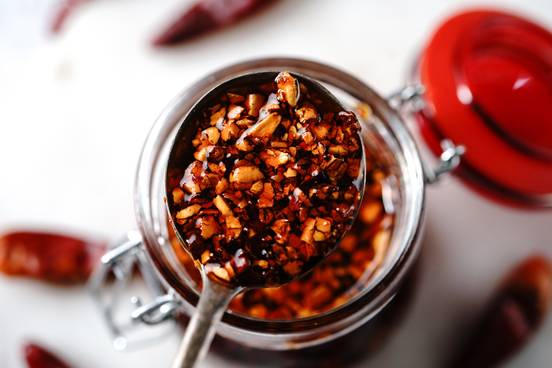
Definition
: a spicy, crunchy condiment made typically of oil, fried chili peppers, and often other aromatics (such as fried onions or garlic)
About the Word
There’s not much to unpack with the etymology of chili crisp (or chile crisp, if you prefer), but it’s worth nothing that this term for the condiment that has taken the food world by storm has been around for a lot longer than you might guess: its first known use appeared in 1989, according to current evidence.
Example
… chili crisp aficionados spooned the slick, oily, crunchy, nutty condiment over eggs, fried rice, noodles, tomato sandwiches and tomato salads—even ice cream.
—
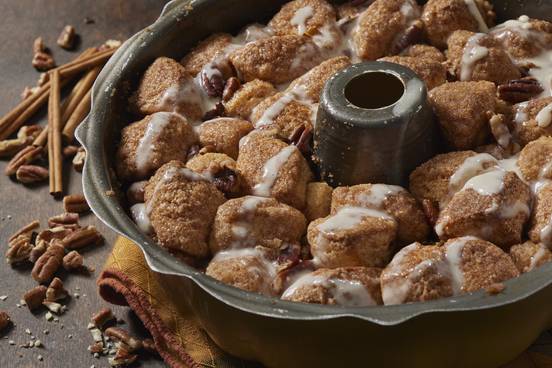
Definition
: a bread or cake made from small balls of dough with a sweet or savory coating that are pressed together before baking and easily pulled apart for eating
About the Word
When presented with cake, it’s usually considered bad form to just rip off a hunk with one’s hands before stuffing it into one’s maw, but not so with monkey bread, so called because it is eaten by pulling off pieces with the fingers, as if it were being eaten by a monkey. Have at it, fellow simians!
Example
You could make monkey bread with prepared dough, say canned biscuits, and I won’t judge you for that. But if you want to make really good monkey-bread dough, scratch is the way to go. Shredded apple, cinnamon, ginger, vanilla and a hint of maple syrup give these individual monkey breads a seasonal flavor.
—
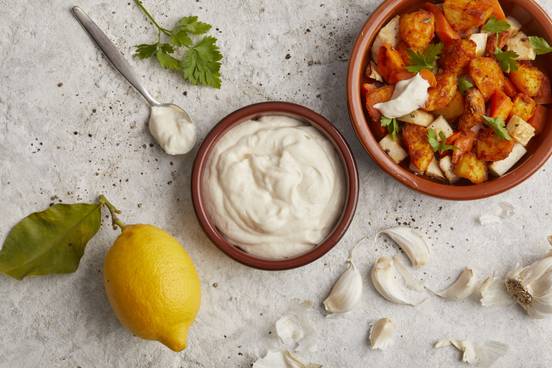
Definition
: a sauce of Levantine origin made chiefly of oil whipped with garlic, salt, and lemon juice and used especially as a condiment, dip, or spread in Middle Eastern cuisine
About the Word
Arabic speakers kept it nice and simple when then named this delicious, garlicky emulsion thūm; in addition to referring to the condiment, it also means “garlic.” Before entering English around the turn of the 21st century, the Arabic thūm passed through French, gaining its spelling toum. Garlic, for those interested, comes from the Old English gārlēac, from gār (“spear”) + lēac (“leek”).
Example
Even as a vegetarian, I go to Zankou Chicken for the falafel, and I never leave without toum, the incomparable garlic sauce that makes this eatery a true standout.
—
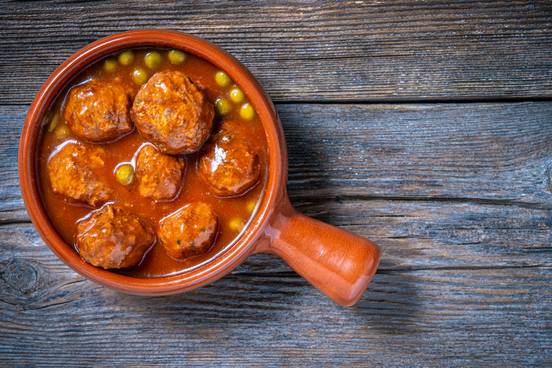
Definition
: meatball
About the Word
You might expect a word with such a simple definition to have a simple etymology. And it’s true that the Spanish albóndiga, when English albondiga, also means “meatball.” But from there the word’s history gets a little nutty, literally. Spanish speakers borrowed their word from the Andalusian Arabic al bunduqa, from al (“the”) + bunduqa (“hazelnut, small ball.”). Bunduqa in turn traces back to the Greek word Pontikón, literally, “Pontic nut,” as Pontic means “of the Black Sea.”
Example
Meatballs don’t always have to be meat. Along the Mexican coast, you can find brighter variations of meatballs made with ground fish and shrimp that shatter your expectations of what albondigas can be.
—
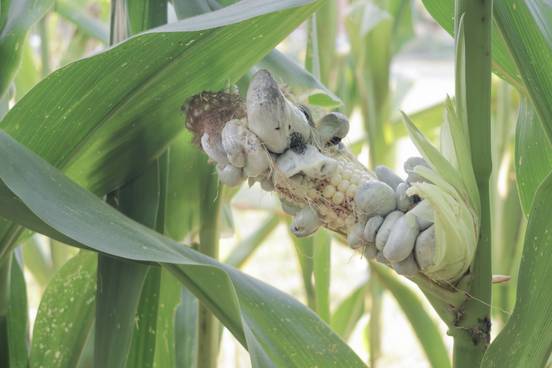
Definition
: corn kernels that have been infected by a fungus (Mycosarcoma maydis syn Ustilago maydis) that causes corn smut and that are eaten as a delicacy especially in Mexican cuisine
About the Word
Intrepid are the eaters who, when there’s a fungus among us, decide to have a little taste, as a treat. Sometimes it even works out! It certainly did for the ancient Indigenous peoples of what is today known as Mexico, who discovered that corn kernels infected with a particular fungus were tasty indeed. Huitlacoche comes to English, via Mexican Spanish, from the Nahuatl word cuitlacochin. (Other more common food words from Nahuatl include chocolate and avocado.) Less appetizing, perhaps, is the synonym corn smut.
Example
… triangles of crispy heirloom corn masa with a huitlacoche filling with epazote and creamy wild mushroom salsa. (Huitlacoche has a deep, earthy essence, almost like a blend of mushrooms and truffles, while epazote is a classic Mexican herb.)
—
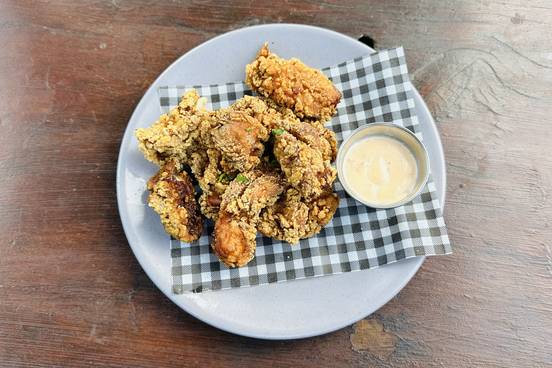
Definition
: a Japanese dish consisting of pieces of meat (usually chicken), fish, or vegetables that have been marinated and then coated in flour, potato starch, or cornstarch and deep-fried
About the Word
Karaage can be used alone (as in “ordered ramen and karaage”) or either before or following the fried food in question, as in “chicken karaage/karaage chicken.” It can also be used for the cooking technique used to prepare the dish. Karaage is a borrowing from Japanese, where it refers to the technique of deep-frying food without batter (as opposed to tempura, and comes from kara- (“empty”) + -age, from ageru meaning “to fry.”
Example
The chicken karaage … is juicy and crunchy, served with a slightly spicy aioli.
—
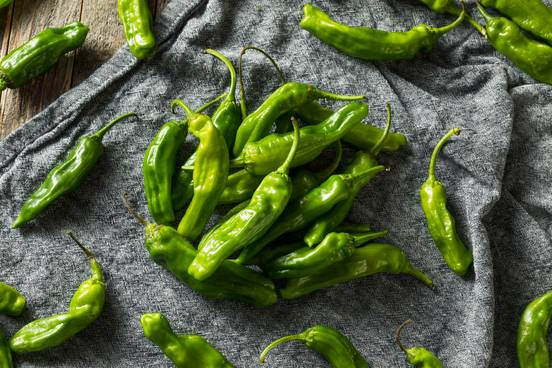
Definition
: a slender usually mild chili pepper of East Asia typically harvested while still green
About the Word
The operative word in our definition is “usually.” An often-remarked upon trait of shishitos is that, seemingly in every batch or bag of these tasty peppers, one will be terrifically spicy. Shishito comes from the Japanese shishitō, short for shishitōgarashi, from shishi (“lion”) + tōgarashi (“chili pepper”).
Example
Unlike most peppers, which are known by the power of their heat, shishitos are unique for the nuances of their sweetness—delicate with crisp notes of citrusy, smoky and grassy flavors.
—