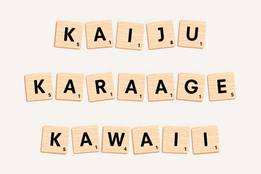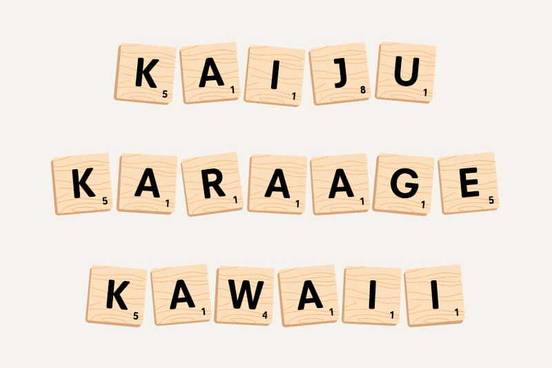
Everyone who has played more than a few games of Scrabble knows that sometimes the luck of the draw is actually just bad luck and a lot of vowels. It is always handy to have memorized a number of vowel-rich words so that you can get rid of some extra a’s or i’s. The new edition of the Scrabble Dictionary contains a number of loan words from Japanese, such as kaiju (“a giant monster”), karaage (“a Japanese dish of deep-fried marinated meat or fish”), and kawaii (“a cute and lovable quality”) which will allow you to remove vowels from your rack while still scoring points.
Additional new words that can serve as vowel dumps include balayage (“a technique of hair coloring”), nigiri (“sliced raw seafood”), and boujee (“characterized by a concern for wealth and status”).
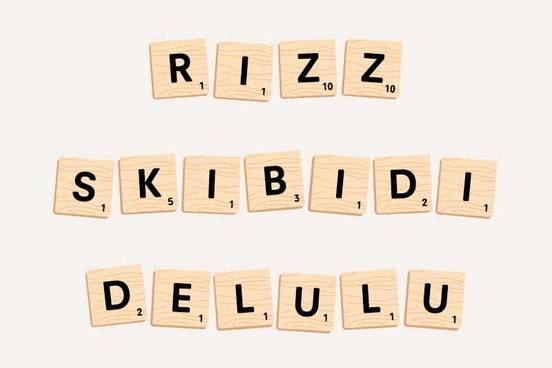
We’ve also added a number of slang words which are relatively new; these will come in handy when playing against relatives over the age of 40, as they will be confused and annoyed by them. Among the new entries in this vein are rizz (“to charm or seduce”), skibidi (“used humorously as a nonsensical word”), and delulu (“delusional”).
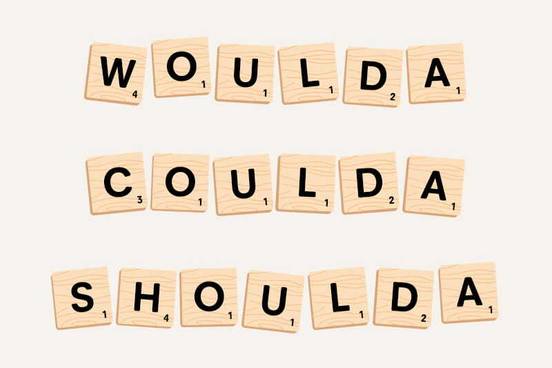
We have added a number of pronunciation spellings (such as woulda, coulda, and shoulda), which are used both in informal speech and in representations of such speech. Also now playable are wanna, tryna, sorta, and gotta.
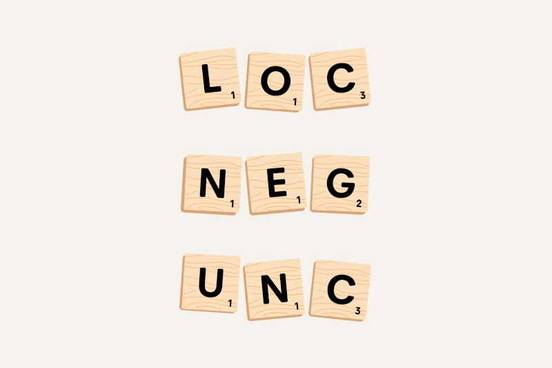
Scrabble is not just made up of luxurious long vocabulary; the game is often decided by a player’s skillful use of short words. Newly added examples of this include loc (“a ropelike strand of hair”), neg (“to manipulate with insults”), and unc (“an old man”).
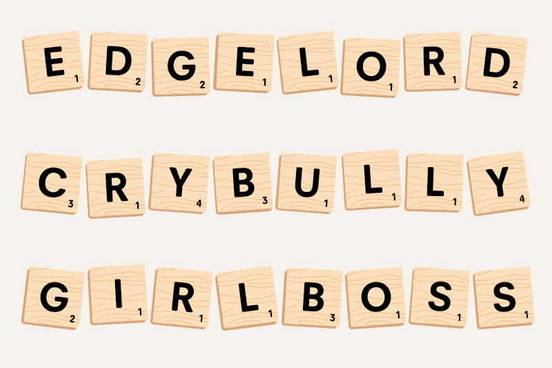
An important tactic in many a Scrabble game is adding letters onto an existing word. The new edition includes a healthy number of compound words that will allow you to do just that: edgelord (“an online agitator”), crybully (“a person who bullies by eliciting sympathy”), and girlboss (“an aspiring successful woman”) are all now playable words.
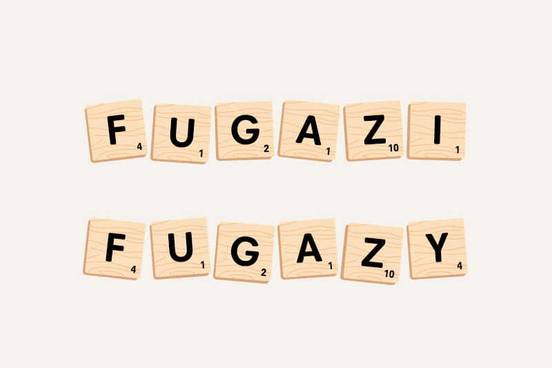
Yet another tool in the arsenal of the successful and devious Scrabble player is having an extensive body of knowledge about which obscure words have even more obscure variations. Is the Scottish word for ‘a place frequently visited’ spelled howf or howff? Both! Recently added words and variants include fugazi/fugazy (“a person or thing posing or passed off as another”), saditty/seditty (“arrogant or conceited”), konjac/konjak (“a perennial plant”), and yas/yass/yaass (“used to express affirmation”).
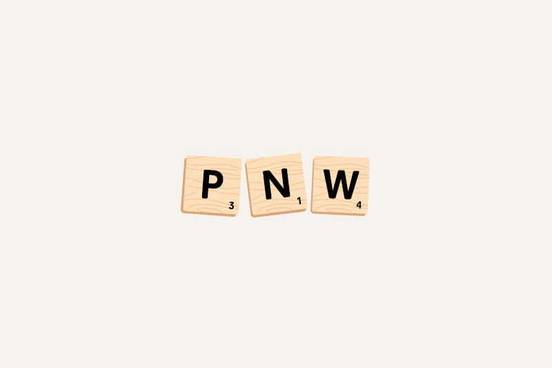
While most English words include a vowel (or at least a vowel sound), there are a handful which do not, and a number of these make for excellent Scrabble plays. Among them now is pwn, which joins the ranks of other playable words such as nth, cwm, hmm, grrrl, and the mighty tsktsks. Pwn is defined as “to defeat overwhelmingly,” and we hope that you are able to use it in your next game to do just that to your opponent.