Dutch Treat and French Leave: Eight Place-Based Compounds
Whether you’re California dreaming or in a New York state of mind
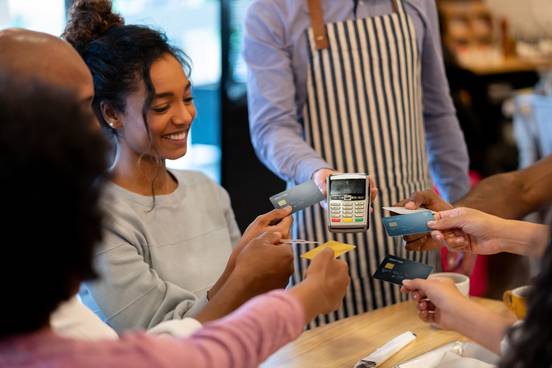
Definition: a meal or other entertainment for which each person pays their own way
Dutch treat is what you might call a demonymic compound (not to be confused with a demonic compound, mind you, which might be something like devil’s food cake). A demonym is a word (such as Nevadan or Sooner) used to refer to a person who inhabits or is native to a place. The terms on this list don’t involve nicknames, but they do reference specific places, and often came about due to associations people had with those places, or people from those places. Dutch treat, for example, arose in the late 1800s from what was considered a typical Dutch custom of splitting expenses. In addition to being used as a noun, Dutch treat can be used as an adverb, as in “went Dutch treat on lunch.” If you’re into the whole brevity thing, you can also simply go Dutch.
There will be a Dutch treat, get-reacquainted luncheon, and the group will discuss future plans.
—The Bedford (Pennsylvania) Gazette, 18 July 2024
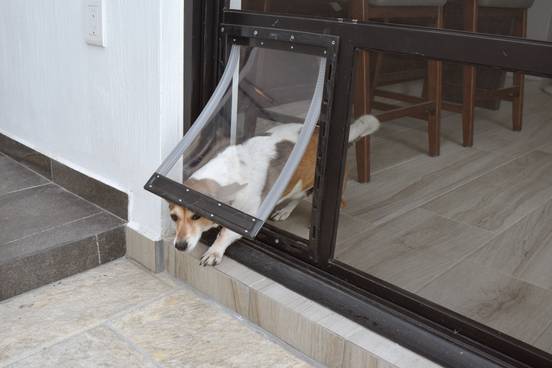
Definition: an informal, hasty, or secret departure
While Dutch treat seems fairly unobjectionable as far as these things go, complimentary even, French leave has surely ruffled a few plumes in its day, as dipping out of a social gathering unnoticed is sometimes considered a faux pas. And who wants to be associated with rudeness? Certainly not the French! Have no fear, however, as turnabout is fair play, and the French have their own terminology for the same practice: filer à l'anglaise, “leave in the English style.”
What about the graceful exit? For large parties with 20 or more, it’s best to spare everyone the dramatic goodbyes by quietly sneaking out with a “French leave.” Follow up with a thank you call or note to the host the next day.
—

Definition: a sound of contempt made by protruding the tongue between the lips and expelling air forcibly to produce a vibration
From early uses of Bronx cheer in the 1920s we can surmise that the term originated with New York City natives themselves, including residents of the Bronx, rather than by, say, folks in Kalamazoo or even Oneonta.
The people who look down from the roof of Madison Square Garden at hockey games had given him a nickname—“Red Light” Miller, drawing their title from the signal that flashes when a goal-guard lets in a shot. They had given Miller what is locally known as the Bronx Cheer, a huzzah of sarcastic intention. Rattled, Miller begged to be sent back to the minor leagues “where they wouldn’t razz him.”
—
The term is a synonym of raspberry, used for the same jeering sound. That use of raspberry arose from raspberry tart, rhyming slang for “fart.” The word razz, used above, shortens an alteration of this raspberry.
Priscilla and Milton Resnick’s parrots, Buddy and Polly, have nothing against the occasional cracker as long as they get their daily dose of Maryland rye whiskey. And apparently it does wonders for their dawn-to-dusk repertoire, which includes a Bronx cheer and a Frank Sinatra imitation.
—

Definition: a very brief span of time
This linguistic reappraisal of time in the East coast metropolis may be viewed as poking fun at the city’s self-aggrandizement or as an accurate reflection of its tumult and hurly-burly atmosphere. While it had previously been thought that the expression came about in the middle of the 20th century, it turns out that people (especially those who are not from New York) have been describing short instances of time thusly since about the Civil War.
Fast driving is rampant in this city. No effort is made to prevent it. Drivers and pleasure seekers try to fly from one end of town to the other in about a New York minute.
— The Leavenworth Bulletin (Leavenworth, Kansas), 12 July 1870

Definition: a golf match between two pairs of partners with each side playing one ball and partners striking alternately
Wait, what did you think Scotch foursome meant? No, no, no, no, no, no, no. Clearly, you’re not a golfer.
After President Franklin Delano Roosevelt signed the Cullen–Harrison Act, a precursor to the end of Prohibition, the Wellshire tournament committee suggested a Scotch foursome tournament where the winner was entitled to a “scoop” of beer, while the losers got only a sniff.
—
A Scotch foursome is so-called because the game of golf has long been believed to have originated in Scotland (evidence suggests that early forms of golf were played in the Netherlands first, making the sport a Dutch treat of a different kind). One may also call a Scotch foursome a “foursome” without having to break out your atlas. Foursome has enjoyed this golf-specific sense since the mid-1800s.
Perhaps you will find three men, who, with yourself, will make a good foursome.
—

Definition: an outfit consisting of a denim jacket and jeans
Canadian tuxedo is a relatively recent coinage, debuting in the script for the 2001 comedy film Super Troopers, which was written by the Broken Lizard comedy group. It is not as yet entered in our pages, but apart from poking gentle fun at the sartorial proclivities of the U.S.’s northern neighbors, Canadian tuxedo is a useful term for jean genies everywhere. It’s also a demonymic twofer: tuxedo comes from Tuxedo Park, a village about 50 miles north of Manhattan, where in the 1880s some young men, disregarding the fashion of the day, began to wear dinner jackets without tails.
Back home, Rihanna held down the fort in a less-than-traditional Canadian tuxedo.
—
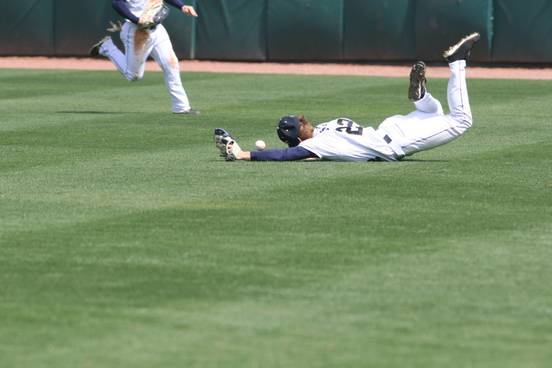
Definition: a fly in baseball that falls too far out to be caught by an infielder and too close in to be caught by an outfielder
Joining Scotch foursome in the sports category, but with far less (we think) risk of innuendo, is Texas leaguer. The Texas League is a minor league that has existed in some form in the southern United States since 1888. It is still in operation today as a Double-A level league consisting of ten teams (five from Texas as well as one each from Kansas, Oklahoma, and Missouri, and two from Arkansas). It’s not exactly clear how the Texas League came to be associated with shallow pop flies dropping in for hits. Among several theories, one suggests that such hits were once common in the league due to swirling winds off the Gulf Coast.
...Teagan Cumberland hit a Texas leaguer into left field on a 2-2 count to give Moeller an early 2-0 lead.
—
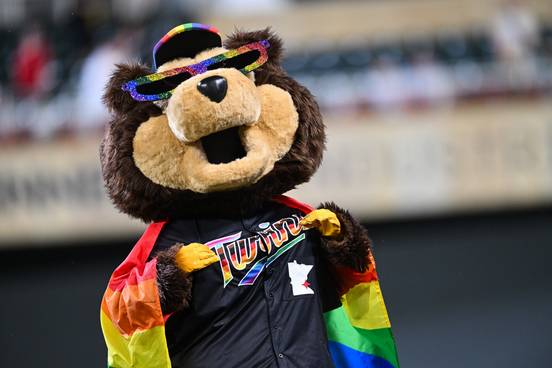
Definition: a generous and kind spirit or demeanor associated with the people of Minnesota
If Minnesota nice is not yet entered in our dictionary, it may be because Minnesotans themselves are still (politely) debating its finer points. But most seem to agree that the core of Minnesota nice is not outward, animated friendliness or cheeriness per se, but an inner quality of generosity, modesty, and neighborliness. Do Minnesotans know it when they see it? Oh, you betcha.
Third-year student Dylan Pekay said he experienced what he considers Minnesota nice firsthand this past winter during a severe storm, when he and some friends wound up driving into a ditch following a ski trip. “Not within five minutes, some guy with a tow truck— not even a tow truck, but just a truck and a big enough chain— was able to pull us out, and he just did that out of the kindness of his heart,” Pekay said.
—