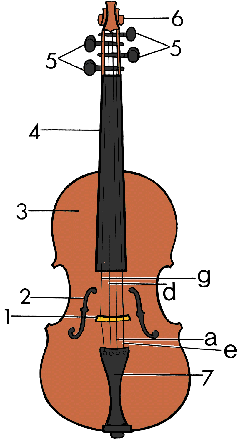
: a bowed stringed instrument having four strings tuned at intervals of a fifth and a usual range from G below middle C upward for more than 4½ octaves and having a shallow body, shoulders at right angles to the neck, a fingerboard without frets, and a curved bridge
Examples are automatically compiled from online sources to
show current usage.Read More
Opinions expressed in the examples do not represent those of Merriam-Webster or its editors.
Send us feedback.
One of Broward’s rare breakout pop acts, Black Violin’s Wil B and Kev Marcus are Dillard High grads who began turning heads playing hip-hop on viola and violin at Fort Lauderdale bars about 20 years ago.—
Greg Carannante,
Sun Sentinel,
8 Oct. 2026 In one, a dark-haired man played the Camille Saint-Saëns song on a dusty violin while a ballerina in a fanlike feathery skirt danced the part of the swan.—
Tom Drury,
Harpers Magazine,
29 Sep. 2026 Her performance tonight, drenched in red and flanked by violins, was a testament to the timeless appeal of her voice.—
Isabella Albaig,
Vulture,
28 Sep. 2026 Winters said his mission is still driven in large part by getting kids excited about playing a violin or cello.—
Andres Viglucci,
Miami Herald,
25 Sep. 2026 See All Example Sentences for violin
Word History
Etymology
borrowed from Italian violino, from viola "viola, viol" + -ino, diminutive suffix, going back to Latin -īnus-ine entry 1


 Copy Citation