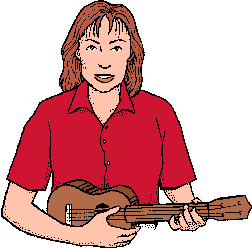
: a small guitar of Portuguese origin popularized in Hawaii in the 1880s and strung typically with four strings
Illustration of ukulele
Examples of ukulele in a Sentence
Recent Examples on the Web
Examples are automatically compiled from online sources to
show current usage.Read More
Opinions expressed in the examples do not represent those of Merriam-Webster or its editors.
Send us feedback.
During the pandemic, millions of Americans took up new hobbies to pass the time; some baked sourdough loaves, others took up the ukulele or guitar.—
Phil Wahba,
Fortune,
10 Oct. 2026 The lobby overlooks the ocean, and in the evenings, you’re greeted by a 'ukulele player or local musician.—
Condé Nast,
Condé Nast Traveler,
6 Oct. 2026 There was another surge in the 1990s, due largely to the effort of Connecticut native Jim Beloff, who published a series of popular ukulele songbooks and also helped design sleek new ukulele models called The Fluke and The Flea.—
Christopher Arnott,
Hartford Courant,
4 Oct. 2026 The crowd listened in silence as the Polynesians, wearing blue fire uniforms, sang a Tahitian hymn in harmony while two of them strummed ukuleles.—
Michael Finnegan,
Los Angeles Times,
30 Aug. 2026 See All Example Sentences for ukulele
: a usually four-stringed small guitar popularized in Hawaii
Etymology
from Hawaiian ʽukulele "ukulele," literally, "jumping flea," from ʽuku "flea" + lele "jumping"
Word Origin
In the 19th century, a former British army officer named Edward Purvis lived in Hawaii as an official at the royal court. Purvis is said to have been given the Hawaiian nickname of ʽukulele, which means "jumping flea," because he was small and lively. In 1879 Portuguese immigrants arrived in the Hawaiian Islands. They brought several of their native instruments, among them a small four-stringed guitar. Purvis liked this new instrument. He quickly learned to play it. In time the small guitar became a favorite, and it took the nickname of the man who had made it popular.


 Copy Citation