plural rhinoceroses also rhinoceros or rhinocerirī-ˈnä-sə-ˌrī
rə-
: any of a family (Rhinocerotidae) of large heavyset herbivorous perissodactyl mammals of Africa and Asia that have one or two upright keratinous horns on the snout and thick gray to brown skin with little hair
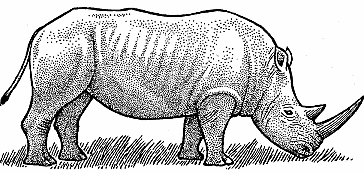
Illustration of rhinoceros
Examples of rhinoceros in a Sentence
Recent Examples on the Web
Examples are automatically compiled from online sources to
show current usage.Read More
Opinions expressed in the examples do not represent those of Merriam-Webster or its editors.
Send us feedback.
Brazil’s joke-candidate tradition stretches back to 1959, from voters’ write-in campaign for a zoo rhinoceros to clown Tiririca’s four terms in Congress.—
Mauricio Savarese,
Los Angeles Times,
30 Sep. 2026 Brazil's tradition of novelty candidates dates back to 1959, when roughly 100,000 voters in São Paulo wrote the name of Cacareco, a female rhinoceros from the city zoo, on their paper ballots in a city council election.—ABC News,
30 Sep. 2026 The fourth, the Indian rhinoceros, is vulnerable, its habitat shrinking rapidly as fragmented and isolated population groups spread across a shattered landscape littered with invasive plant species poisonous to the animals.—Literary Hub,
22 Sep. 2026 Slattery has also conducted research on renewable energy and rhinoceros conservation.—
Emily Holshouser,
Fort Worth Star-Telegram,
3 Sep. 2026 See All Example Sentences for rhinoceros
Word History
Etymology
Middle English rinoceros, from Anglo-French, from Latin rhinocerot-, rhinoceros, from Greek rhinokerōt-, rhinokerōs, from rhin- + keras horn — more at horn
: any of various large plant-eating mammals of Africa and Asia that are related to the horse and have a thick skin with little hair, three toes on each foot, and one or two heavy upright horns on the snout
Etymology
Middle English rinoceros "rhinoceros," from Latin rhinocerot-, rhinoceros (same meaning), from Greek rhinokerōt-, rhinokerōs, literally "nose-horned," from rhin-, rhis "nose" and keras "horn"
Word Origin
One of the largest animals found on land today is the thick-skinned rhinoceros. Another of the animal's characteristics, besides large size, is found on its snout. All rhinoceroses have at least one horn, and some have two horns. The English name for this animal with a horn or horns on its snout was borrowed from Latin rhinoceros. The Latin name, in turn, came from the Greek word rhinokerōs, which literally means "nose-horned." This word is made up of the Greek word rhin-, rhis, meaning "nose" and the word keras, meaning "horn."


 Copy Citation