


Illustration of tick
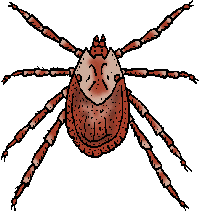
- tick 1
 Gerald WarfieldJoe Janes Barry Ritholtz
Jamie L. Lareau, Detroit Free Press, 15 Apr. 2024
The easiest way to prevent ticks is to look for them.
—Lisa Sanders, M.d., New York Times, 12 Apr. 2024
That's because time ticks by faster on the moon relative to Earth.
—Kai McNamee, NPR, 9 Apr. 2024
Forecasters will continue to update the cloud cover forecasts, as the countdown ticks closer to the solar eclipse.
—Kathryn Prociv, NBC News, 3 Apr. 2024
In short, partisan echo chambers are stale, musty spaces that lack the sort of oppositional views needed to make social media tick.
—Lorraine Ali, Los Angeles Times, 3 Apr. 2024
Harrison was able to hit 97 mph on the radar gun — three ticks faster than his average velocity — before even ramping up to maximum effort.
—Laurence Miedema, The Mercury News, 27 Mar. 2024
There’s always something going on in life that either pleases you or (ticks) you off.
—Mike Palm, San Diego Union-Tribune, 24 Mar. 2024
As the clock ticks past 9 a.m., the autumn sun casts a warm glow on designer Nia Thomas.
—Robyn Mowatt, Essence, 18 Mar. 2024
Jeff McDonald, San Diego Union-Tribune, 21 Apr. 2024
The news follows the countdown page’s launch on March 28, which invited Swifties to watch as each second leading up to Tortured Poets‘ April 19 release slowly ticked down.
—Hannah Dailey, Billboard, 18 Apr. 2024
The number of homes sold in Ada and Canyon counties has also ticked upward as the spring buying season gets underway.
—Nick Rosenberger, Idaho Statesman, 17 Apr. 2024
Tesla stock ticked up slightly in pre-market trading Wednesday morning.
—William Gavin, Quartz, 17 Apr. 2024
The average work week ticked higher, to 34.4 hours, and the labor force participation rate grew to 62.7%, up from 62.5%.
—Alicia Wallace, CNN, 5 Apr. 2024
The Marist survey finds similarly that Biden's approval rating has ticked up 3 points, from 40% in February to 43% this month.
—Domenico Montanaro, NPR, 3 Apr. 2024
James’s attorney argued that he be sentenced to time served — and the clock has been ticking since the couple was arrested in December 2021 when police officers found the husband and wife camped out in a warehouse on the east side of Detroit, some 40 miles south of Oxford.
—Robin Givhan, Washington Post, 9 Apr. 2024
As the length of the war on Hamas, and the hostages’ captivity, ticked to 100 days, some of the former captives have been free longer than they were held.
—Bianna Golodryga, CNN, 7 Apr. 2024
Gerald WarfieldJoe Janes Barry Ritholtz
Jamie L. Lareau, Detroit Free Press, 15 Apr. 2024
The easiest way to prevent ticks is to look for them.
—Lisa Sanders, M.d., New York Times, 12 Apr. 2024
That's because time ticks by faster on the moon relative to Earth.
—Kai McNamee, NPR, 9 Apr. 2024
Forecasters will continue to update the cloud cover forecasts, as the countdown ticks closer to the solar eclipse.
—Kathryn Prociv, NBC News, 3 Apr. 2024
In short, partisan echo chambers are stale, musty spaces that lack the sort of oppositional views needed to make social media tick.
—Lorraine Ali, Los Angeles Times, 3 Apr. 2024
Harrison was able to hit 97 mph on the radar gun — three ticks faster than his average velocity — before even ramping up to maximum effort.
—Laurence Miedema, The Mercury News, 27 Mar. 2024
There’s always something going on in life that either pleases you or (ticks) you off.
—Mike Palm, San Diego Union-Tribune, 24 Mar. 2024
As the clock ticks past 9 a.m., the autumn sun casts a warm glow on designer Nia Thomas.
—Robyn Mowatt, Essence, 18 Mar. 2024
Jeff McDonald, San Diego Union-Tribune, 21 Apr. 2024
The news follows the countdown page’s launch on March 28, which invited Swifties to watch as each second leading up to Tortured Poets‘ April 19 release slowly ticked down.
—Hannah Dailey, Billboard, 18 Apr. 2024
The number of homes sold in Ada and Canyon counties has also ticked upward as the spring buying season gets underway.
—Nick Rosenberger, Idaho Statesman, 17 Apr. 2024
Tesla stock ticked up slightly in pre-market trading Wednesday morning.
—William Gavin, Quartz, 17 Apr. 2024
The average work week ticked higher, to 34.4 hours, and the labor force participation rate grew to 62.7%, up from 62.5%.
—Alicia Wallace, CNN, 5 Apr. 2024
The Marist survey finds similarly that Biden's approval rating has ticked up 3 points, from 40% in February to 43% this month.
—Domenico Montanaro, NPR, 3 Apr. 2024
James’s attorney argued that he be sentenced to time served — and the clock has been ticking since the couple was arrested in December 2021 when police officers found the husband and wife camped out in a warehouse on the east side of Detroit, some 40 miles south of Oxford.
—Robin Givhan, Washington Post, 9 Apr. 2024
As the length of the war on Hamas, and the hostages’ captivity, ticked to 100 days, some of the former captives have been free longer than they were held.
—Bianna Golodryga, CNN, 7 Apr. 2024
These examples are programmatically compiled from various online sources to illustrate current usage of the word 'tick.' Any opinions expressed in the examples do not represent those of Merriam-Webster or its editors. Send us feedback about these examples.
“Tick.” Merriam-Webster.com Dictionary, Merriam-Webster, https://www.merriam-webster.com/dictionary/tick. Accessed 27 Apr. 2024.
tick
1 of 5 nountick
2 of 5 nountick
3 of 5 nountick
5 of 5 nounNoun
Middle English tyke, teke "tick"
Noun
Middle English tike "a fabric case for a mattress"; probably of Dutch origin
Noun
Middle English tek "a rhythmic tap or beat"
Noun
a shortened form of ticket "a slip recording a business deal"
tick
noun

 Copy Citation


Share