


Illustration of pronghorn
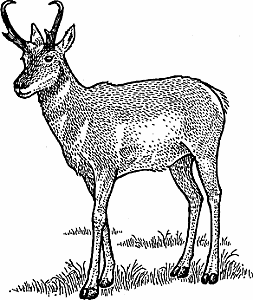

Note: Although the pronghorn is sometimes informally called the pronghorn antelope or less commonly the American antelope, it belongs to a different family than true antelope and is the only living species of its family (Antilocapridae).
 Dan Flores, Time, 29 May 2025
Species like Wyoming’s pronghorn antelope and mule deer are particularly affected.
—Dianne Plummer, Forbes.com, 22 May 2025
This allowed antler collectors and other interested buyers to walk past some of the piles of furs and stacks of trophy antlers — mostly from elk and mule deer, although the DWR says a few moose, sheep, and pronghorn are in the mix as well.
—Dac Collins, Outdoor Life, 27 Mar. 2025
Only 137 pronghorn hunting tags were offered by CDFW in 2024.
—Rick Hurd, The Mercury News, 12 Feb. 2025
See All Example Sentences for pronghorn
Dan Flores, Time, 29 May 2025
Species like Wyoming’s pronghorn antelope and mule deer are particularly affected.
—Dianne Plummer, Forbes.com, 22 May 2025
This allowed antler collectors and other interested buyers to walk past some of the piles of furs and stacks of trophy antlers — mostly from elk and mule deer, although the DWR says a few moose, sheep, and pronghorn are in the mix as well.
—Dac Collins, Outdoor Life, 27 Mar. 2025
Only 137 pronghorn hunting tags were offered by CDFW in 2024.
—Rick Hurd, The Mercury News, 12 Feb. 2025
See All Example Sentences for pronghorn
“Pronghorn.” Merriam-Webster.com Dictionary, Merriam-Webster, https://www.merriam-webster.com/dictionary/pronghorn. Accessed 13 Jun. 2025.
pronghorn
noun
called also pronghorn antelope
 Copy Citation


Share