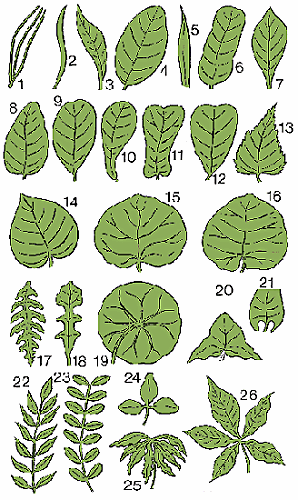
: a lateral (see lateralentry 1 sense 2) outgrowth from a plant stem that is typically a flattened expanded variably shaped greenish organ, constitutes a unit of the foliage, and functions primarily in food manufacture by photosynthesis
(2)
: a modified leaf (such as a bract or sepal) primarily engaged in functions other than food manufacture
Noun
I heard the rustle of the autumn leaves.
a pile of dead leaves
The trees drop their leaves in the fall, and new leaves grow again in the spring.
The trees have not yet come into leaf. Verb
we must have spent hours leafing through wallpaper books before we found something we both liked
Recent Examples on the Web
Examples are automatically compiled from online sources to
show current usage.Read More
Opinions expressed in the examples do not represent those of Merriam-Webster or its editors.
Send us feedback.
Noun
Eventually, the plant returns as a leaf or a flower, photosynthesizing energy in preparation for its next bloom.—
Emily Tarinelli,
Los Angeles Times,
10 July 2026 It’s enriched with key ingredients like nettle, rosehip, and rosemary leaf extract, along with wild bergamot oil, and is lightweight enough not to weigh hair down while working its magic.—
Jessie Quinn,
StyleCaster,
10 July 2026
Verb
Planting a leafed-out, growing hosta from a pot is identical to any other transplanting process.—
Samantha Johnson,
Martha Stewart,
29 June 2026 Twelve-hundred years passed in the shade of the Major Oak of Sherwood Forest before it was declared dead after failing to come to leaf.—
Karina Zaiets,
USA Today,
19 June 2026 See All Example Sentences for leaf
Word History
Etymology
Noun
Middle English leef, from Old English lēaf; akin to Old High German loub leaf
First Known Use
Noun
before the 12th century, in the meaning defined at sense 1a(1)


 Copy Citation