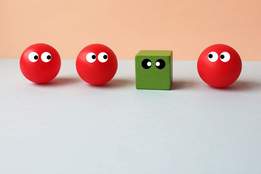
Based partly on the Latin iacere, "to throw", dejection means literally "cast down"—that is, "downcast". Like melancholy, gloom, and even sadness, dejection seems to have been declining in use for many years; instead, we now seem to prefer depression (whose roots mean basically "a pressing down"). Since depression is also the word used by doctors, lots of people now assume that anyone depressed should be taking an antidepressant; if we went back to dejected and dejection, we might not be so quick to make that assumption.
I find that ice cream often works wonders when trying to overcome dejection.
Recent Examples on the Web
Examples are automatically compiled from online sources to
show current usage.Read More
Opinions expressed in the examples do not represent those of Merriam-Webster or its editors.
Send us feedback.
But the main source of dejection was the incredible tour de force of executive power in which Trump’s White House was engaged.—Rosa Lyster, Harpers Magazine, 30 Dec. 2025 Karbler notes that dejection and disappointment are common reactions in these kinds of scenarios.—Jake Kring-Schreifels, Time, 27 Oct. 2025 So, too, was the ecstasy at which City celebrated their equally exhilarating 3-2 victory over Arsenal, their joy at odds with the dejection of the Arsenal players who had twice clawed their way back to parity but failed to hold on.—Megan Feringa, New York Times, 5 Oct. 2025 No concrete reason has been given except the theory that lack of results, both individually and collectively, have led to some dejection and that teams sometimes simply go through funks.—Kevin Acee, San Diego Union-Tribune, 3 Sep. 2025 See All Example Sentences for dejection