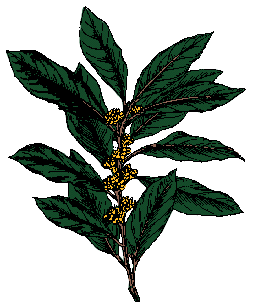
: an evergreen shrub or tree (Laurus nobilis of the family Lauraceae, the laurel family) of southern Europe with small yellow flowers, fruits that are ovoid blackish berries, and evergreen foliage once used by the ancient Greeks to crown victors in the Pythian games
Noun
They enjoyed the laurels of their military victory.
The player earned his laurels from years of hard work.
Recent Examples on the Web
Examples are automatically compiled from online sources to
show current usage.Read More
Opinions expressed in the examples do not represent those of Merriam-Webster or its editors.
Send us feedback.
Noun
Here the part of Mark Antony was played by a European journalist, who with the session’s first question attempted to crown Malkovich with an Oscar winner’s laurels six months ahead of schedule.—
Nate Jones,
Vulture,
4 Sep. 2026 Grady Tripp is a writer and professor who has rested on the laurels of his first book for years and can’t seem to seal the deal of his sophomore novel, which is nearing 2800 words.—Literary Hub,
2 Sep. 2026
Verb
Cusk, a Canadian-Brit educated at Oxford, has long been laurelled and condemned for her ruthless chronicles of selfhood.—
Gary Baum,
HollywoodReporter,
19 Aug. 2026 See All Example Sentences for laurel
Word History
Etymology
Noun
Middle English lorel, in part from Medieval Latin laureola spurge laurel (from Latin, laurel sprig), in part modification of Anglo-French lorer, from Old French lor laurel, from Latin laurus
: an evergreen shrub or tree of southern Europe related to the sassafras and cinnamon with shiny pointed leaves used by the ancient Greeks to crown victors in various contests
2
: a tree or shrub (as a mountain laurel) that resembles the true laurel


 Copy Citation


