Illustration of gargoyle
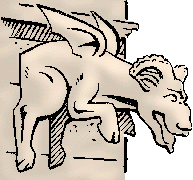
- gargoyle 1a


In the 12th century, St. Bernard of Clairvaux reportedly complained about the new sculptures in the cloisters where he lived. "Surely," he is quoted as saying, "if we do not blush for such absurdities we should at least regret what we have spent on them." St. Bernard was apparently provoked by the grotesque figures designed to drain rainwater from buildings. By the 13th century, those figures were being called gargoyles, a name that came to Middle English from the Old French word gargoule. The stone beasts likely earned that name because of the water that gargled out of their throats and mouths; the word gargoule is imitative in origin.
 ABC News, 9 June 2026
Haunted Mansion props on the parade floats will include the conservatory casket, cryptic gravestones, gargoyle candleholders, haunted armor and stretching room portraits, according to the concept art.
—Brady MacDonald, Oc Register, 2 June 2026
The gargoyles had channels that directed water off the roof through the mouths of the sculptures.
—Adam Fox, CBS News, 14 May 2026
The story has been updated to correct that the gargoyles are made of terra cotta, not stone.
—Dylan Lovan, Los Angeles Times, 1 Apr. 2026
See All Example Sentences for gargoyle
ABC News, 9 June 2026
Haunted Mansion props on the parade floats will include the conservatory casket, cryptic gravestones, gargoyle candleholders, haunted armor and stretching room portraits, according to the concept art.
—Brady MacDonald, Oc Register, 2 June 2026
The gargoyles had channels that directed water off the roof through the mouths of the sculptures.
—Adam Fox, CBS News, 14 May 2026
The story has been updated to correct that the gargoyles are made of terra cotta, not stone.
—Dylan Lovan, Los Angeles Times, 1 Apr. 2026
See All Example Sentences for gargoyle
“Gargoyle.” Merriam-Webster.com Dictionary, Merriam-Webster, https://www.merriam-webster.com/dictionary/gargoyle. Accessed 18 Jun. 2026.
gargoyle
noun
 Copy Citation