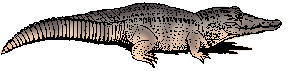
: any of several large, carnivorous, thick-skinned, long-bodied, aquatic reptiles (family Crocodylidae and especially genus Crocodylus) of tropical and subtropical waters that have a long, tapered, V-shaped snout
chiefly British: a line of people (such as schoolchildren) usually walking in pairs
Illustration of crocodile
crocodile 1a
Examples of crocodile in a Sentence
Recent Examples on the Web
Examples are automatically compiled from online sources to
show current usage.Read More
Opinions expressed in the examples do not represent those of Merriam-Webster or its editors.
Send us feedback.
In June, a three-year-old boy was seriously injured in Cambridgeshire, after allegedly being thrown into a crocodile enclosure by a stranger.—
Will Barker,
TheWeek,
13 Oct. 2026 Now, scientists have identified the extinct crocodile species that lived millions of years before the Egyptians built the structures.—
Taylor Nicioli,
CNN Money,
6 Oct. 2026 Isaia cashmere scarf, $750; Dior silk tie, $300; Ferragamo calfskin oxfords, $1,590; Jaeger-LeCoultre Reverso Tribute Monoface Small Seconds in 18-karat pink gold, $27,000; Il Bisonte leather card case, $140; Stefano Ricci crocodile belt, $2,800.—
Justin Fenner,
Robb Report,
3 Oct. 2026 With a luxe crocodile-embossed suede upper and a slight heel that adds just enough height without weighing you down, these loafers deliver a high-end look—despite being considered orthopedic.—
Julia Morlino,
Travel + Leisure,
28 Sep. 2026 See All Example Sentences for crocodile
Word History
Etymology
Middle English & Latin; Middle English cocodrille, from Anglo-French, from Medieval Latin cocodrillus, alteration of Latin crocodilus, from Greek krokodilos lizard, crocodile, from krokē shingle, pebble + drilos worm; akin to Sanskrit śarkara pebble
: any of several large thick-skinned long-bodied reptiles of tropical and subtropical waters compare alligator
2
: the skin or hide of a crocodile
Etymology
from Middle English cocodrille "crocodile," from early French cocodrille (same meaning), from Latin cocodrillus and earlier crocodilus "crocodile," from Greek krokodeilos "crocodile, lizard"
Word Origin
The word crocodile is taken from Greek krokodeilos, which is probably modified from a compound of krokē, "pebble, stone," and an obscure word drilos, which may have meant "worm." According to the ancient Greek writer Herodotus, some Greeks gave this name to the lizards that lived among the stone walls of their farms. When these Greeks visited Egypt, the enormous reptiles of the Nile River reminded them of the lizards and they applied the same name to them. (The more usual ancient Greek word for "lizard" was sauros, which we see in the Latin scientific names of many dinosaurs, such as Tyrannosaurus, and in the word dinosaur itself.) The Romans took Greek krokodeilos into Latin as crocodilus. However, later speakers shifted the r from the first to the third syllable, giving cocodrilus or cocodrillus. It was this form that was taken into medieval French and later into Middle English as cocodrille. Later, as Englishmen became better acquainted with the classical Latin of ancient Rome, the English word was changed to better reflect Latin crocodilus, and cocodrille was eventually forgotten.


 Copy Citation