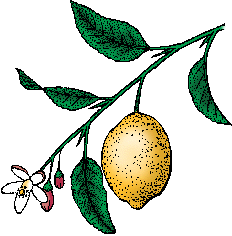
: an acid fruit that is botanically a many-seeded pale yellow oblong berry produced by a small thorny citrus tree (Citrus limon) and that has a rind from which an aromatic oil is extracted
Noun
The recipe calls for the juice of two lemons.
Garnish it with a slice of lemon.
Our new car is a lemon.
Recent Examples on the Web
Examples are automatically compiled from online sources to
show current usage.Read More
Opinions expressed in the examples do not represent those of Merriam-Webster or its editors.
Send us feedback.
Noun
Lemons and Salt The citric acid in lemons will break the bond between grease molecules and oven surfaces.—
Mary Marlowe Leverette,
The Spruce,
11 July 2026 Cocktails include a mimosa, Baja Blast refresher, baja margarita, tequila sunrise, Bloody Mary and a lemon drop.—
Corey Schmidt,
Sacbee.com,
11 July 2026
Adjective
Order a side of fries, which is big enough to share between two people, and top things off with a lemon Italian ice—the only flavor available.—
Ximena N. Beltran Quan Kiu,
Bon Appétit,
16 June 2023 With intoxicating notes of lemon essential oil, blackcurrant bud absolute, raspberry rose Damascena essential oil, cedarwood essential oil, and musk, the eau is sweet and citrusy yet not too overpowering.—
Roxanne Adamiyatt,
Town & Country,
22 Nov. 2022 See All Example Sentences for lemon
Word History
Etymology
Noun
Middle English lymon, from Middle French limon, from Medieval Latin limon-, limo, from Arabic laymūn, līmūn, from Persian līmū, līmun
: an acid fruit that contains citric acid and vitamin C, is botanically a many-seeded pale yellow oblong berry, and is produced by a small thorny tree of the genus Citrus (C. limon)


 Copy Citation