judicious stresses a capacity for reaching wise decisions or just conclusions.
judicious parents using kindness and discipline in equal measure
prudent suggests the exercise of restraint guided by sound practical wisdom and discretion.
a prudent decision to wait out the storm
sensible applies to action guided and restrained by good sense and rationality.
a sensible woman who was not fooled by flattery
sane stresses mental soundness, rationality, and levelheadedness.
remained sane even in times of crises
Examples of sage in a Sentence
Adjective
a sage suggestion that anyone should think long and hard before deciding to marry
the young prince made a pilgrimage to the sage, hoping to learn the meaning of life
Recent Examples on the Web
Examples are automatically compiled from online sources to
show current usage.Read More
Opinions expressed in the examples do not represent those of Merriam-Webster or its editors.
Send us feedback.
Noun
The Eaton fire ripped through the Rubio Canyon Preserve, seriously damaging the canyon’s chaparral, coast sage scrub and riparian habitats.—Jaclyn Cosgrove, Los Angeles Times, 8 Jan. 2026 Another photo shows an elegant black piano in a room with floor-to-ceiling windows draped in linen curtains, with sage green and white armchairs and a cork coffee table with books and a vase of hydrangeas in view.—Madison E. Goldberg, PEOPLE, 8 Jan. 2026 The butter is nutty with notes of caramel, while the sage is earthy, savory and woodsy, with a touch of freshness that some liken to citrus, eucalyptus or mint.—The Washington Post, San Diego Union-Tribune, 7 Jan. 2026 The beautiful smell of Marriott’s signature scent is both inspiring and mysterious, blended with top notes of cassis, sparkling Fuji apple, grapefruit, cyclamen, paired with the subtle notes of pink jasmine, rose, lily of the valley, mountain sage, white cedar, and pale musk.—Caroline Hughes, Travel + Leisure, 6 Jan. 2026 See All Example Sentences for sage
Word History
Etymology
Adjective
Middle English, from Anglo-French, from Vulgar Latin *sapius, from Latin sapere to taste, have good taste, be wise; akin to Oscan sipus knowing, Old Saxon ansebbian to perceive
Noun (2)
Middle English, from Anglo-French sage, salge, from Latin salvia, from salvus healthy; from its use as a medicinal herb — more at safe
Middle English sage "wise," from early French sage (same meaning), derived from Latin sapere "to be wise, taste, have good taste" — related to insipid, savant
Noun
Middle English sage "sage plant," from early French sage, salge (same meaning), from Latin salvia "sage plant used for health," from salvus "safe, healthy" — related to safe, save
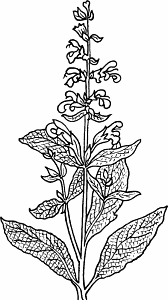
: a perennial mint of the genus Salvia (S. officinalis) having grayish green pungent and aromatic leaves that are much used in flavoring foods and as a mild tonic and astringent
Share