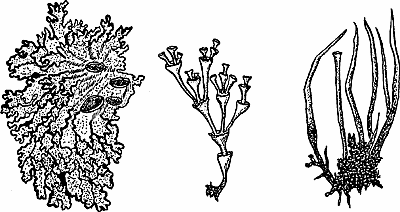
: any of numerous complex plantlike organisms made up of an alga or a cyanobacterium and a fungus growing in symbiotic association on a solid surface (such as on a rock or the bark of trees)
Note:
The main body of the lichen, known as the thallus, is formed by fungal filaments which surround the photosynthetic algal or cyanobacterial cells. The lichen is usually described as having a leaflike (foliose), crusty (crustose), or branching shrub-like (fruticose) form. Lichens often play an important part in the weathering of rocks and include some that are sources of natural dyes.
2
: any of several skin diseases characterized by the eruptions of flat papules
Examples are automatically compiled from online sources to
show current usage.Read More
Opinions expressed in the examples do not represent those of Merriam-Webster or its editors.
Send us feedback.
The cave’s kaleidoscopic colors come from the contrast of the rocks’ hues and those of the various lichens and algae that cover them.—Kate Bradshaw, Mercury News, 23 Mar. 2026 Their livestock wander about us, enormous antlers swinging, hooves clicking — the sound helps them to find each other in a blizzard — and occasionally nibbling lichen from Aatsinki’s outstretched hand.—Liam Denning, Bloomberg, 12 Mar. 2026 Chickadees and hummingbirds often use spongy moss and lichen as nesting materials.—Madeline Buiano, Martha Stewart, 10 Mar. 2026 Little white mushrooms and sprigs of grayish-green lichen dotted the ground.—Elizabeth Flock, New Yorker, 23 Feb. 2026 See All Example Sentences for lichen
Word History
Etymology
Latin, from Greek leichēn, lichēn, from leichein to lick