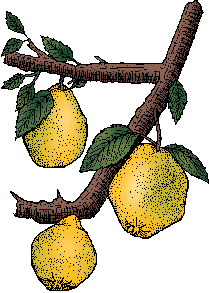
: the fruit of a central Asian tree (Cydonia oblonga) of the rose family that resembles a hard-fleshed yellow apple and is used especially in preserves
Examples are automatically compiled from online sources to
show current usage.Read More
Opinions expressed in the examples do not represent those of Merriam-Webster or its editors.
Send us feedback.
Only light regional dishes and bites such as croquettes, Cinco Jotas ham, cheese, and quince, along with Rioja Alavesa wine, are served for lunch or supper via the Delicatessen or Egukzi Soro Bar and Garden (or room service).—
Condé Nast,
Condé Nast Traveler,
6 Oct. 2026 The insects also develop in quince and are reported to be incidental in plums, pears, tart cherries, and certain other members of the rose family.—Encyclopedia Britannica,
29 Sep. 2026 The composition opens with quince and grapefruit for a bright, citrusy lift, while rose and jasmine lend a softer floral quality at the heart.—
Conçetta Ciarlo,
Vogue,
3 Sep. 2026 The tenth-century Persian physician Rhazes suggested small, protein-rich meals of chicken or goat to encourage good humors, and quinces and pomegranates to restore appetite.—
The New Yorker,
New Yorker,
7 Aug. 2026 See All Example Sentences for quince
Word History
Etymology
Middle English quynce quinces, plural of coyn, quyn quince, from Anglo-French coign, from Latin cotoneum, alteration cydonium, from Greek kydōnion


 Copy Citation