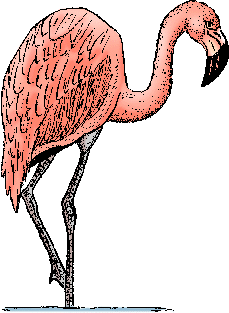
Illustration of flamingo

 Marzio G. Mian, Vanity Fair, 16 June 2026
Yes, pink flamingos are synonymous with Miami.
—Andrew Greif, NBC news, 16 June 2026
Anthurium Beloved by florists, anthurium—also called flamingo flower, laceleaf, and pigtail plant—is long-lasting both on the plant and when cut.
—Kate Nateras, Architectural Digest, 10 June 2026
Its crest features a plastic lawn flamingo, the official city bird.
—Charles Usher, Midwest Living, 9 June 2026
See All Example Sentences for flamingo
Marzio G. Mian, Vanity Fair, 16 June 2026
Yes, pink flamingos are synonymous with Miami.
—Andrew Greif, NBC news, 16 June 2026
Anthurium Beloved by florists, anthurium—also called flamingo flower, laceleaf, and pigtail plant—is long-lasting both on the plant and when cut.
—Kate Nateras, Architectural Digest, 10 June 2026
Its crest features a plastic lawn flamingo, the official city bird.
—Charles Usher, Midwest Living, 9 June 2026
See All Example Sentences for flamingo
“Flamingo.” Merriam-Webster.com Dictionary, Merriam-Webster, https://www.merriam-webster.com/dictionary/flamingo. Accessed 19 Jun. 2026.
flamingo
noun
from Portuguese flamingo "flamingo," from Spanish flamenco "flamingo," derived from Latin flamma "flame"; so called from the fiery red feathers on the underside of the wings
 Copy Citation